When agencies choose a backlink vendor, they are not just buying links. They are trusting another company with their clients’ search visibility and long term rankings.
A poor vendor can introduce risky links quickly. These links may trigger penalties, weaken trust signals, and undo years of SEO work. That is why professional SEO teams treat backlink vendor evaluation as a structured process, not a quick check of surface metrics.
Backlink vendor evaluation means reviewing how a vendor builds links at scale. Agencies examine the types of sites used, the relevance of placements, the natural use of anchor text, and the level of transparency in the process. One good link is never enough. What matters is consistency across many placements.
As Google’s spam detection systems become more advanced, metrics like DA or DR no longer provide reliable answers. Agencies must determine whether a vendor’s links behave like real editorial references or paid insertions designed to manipulate rankings.
This article explains how agencies evaluate backlink vendors for quality, relevance, safety, and long term SEO value. The same principles can help any business choose link providers without risking future performance.
What Backlink Vendor Evaluation Means
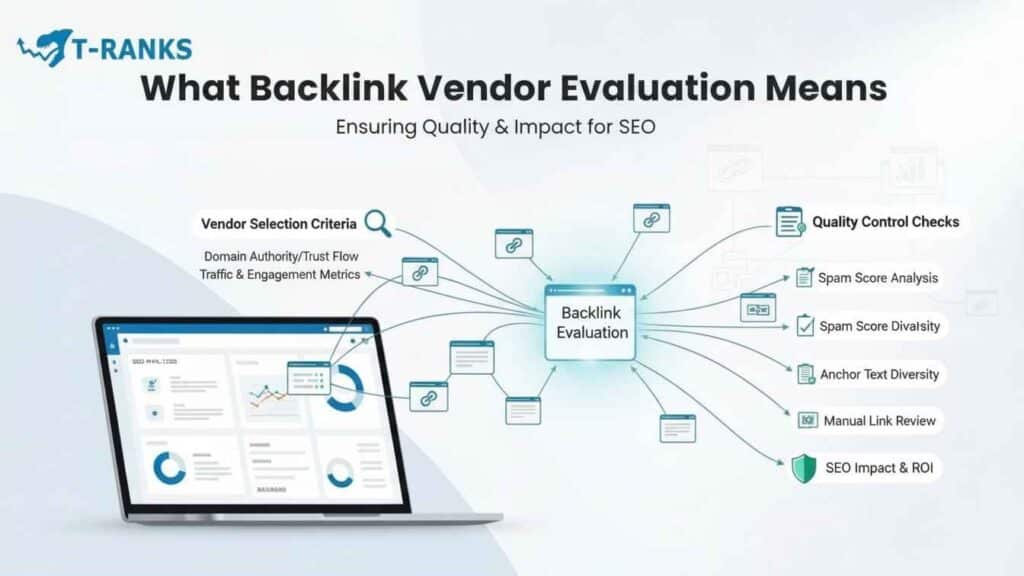
Backlink vendor evaluation means checking how safe, reliable, and consistent a vendor’s links are over time.
It is not the same as checking a single backlink. One good link does not prove that a vendor is trustworthy or that their process is safe.
When agencies evaluate a backlink vendor, they look at patterns. They review how links are placed across many websites, how anchors are used, how relevant the sites are, and whether quality stays consistent as volume increases.
Vendors are judged on long-term behavior, not on one example or a few screenshots. A vendor is only considered reliable if they can repeatedly deliver links that look natural, stay indexed, and do not create detectable footprints.
In simple terms, backlink vendor evaluation answers one question:
Can this vendor keep building safe, natural links month after month without putting rankings at risk?
Why Backlink Metrics Alone Are Not Enough
Backlink metrics alone are not enough to evaluate a backlink vendor because they do not show how links are built, how sites behave over time, or how much risk is involved.
Numbers like Domain Authority, Domain Rating, or traffic estimates only show surface strength. They do not reveal whether links are placed editorially, whether sites are trustworthy, or whether a vendor can deliver safe links consistently.
A website with high DA can still be risky. Some sites operate as private networks, rely on spammy outbound links, or exist mainly to sell placements. These problems are invisible when decisions are based on scores alone.
Experienced agencies also know that metrics can be manipulated. DA or DR can be inflated through redirects, artificial traffic, or link exchanges that offer little real value. That is why professional backlink vendor evaluation focuses on link behavior instead of numbers.
What matters most is consistency. Agencies look for stable visibility, real editorial content, and natural link growth over time. Sudden spikes, thin pages, or repeated placement patterns usually signal manipulation.
Metrics remain useful for shortlisting vendors, but they should never decide approval. Ranking security depends on where links come from and how they behave, not on third-party scores.
The Main Factors Used to Evaluate Backlink Vendors
Backlink vendor evaluation focuses on whether a vendor can deliver safe, consistent, and relevant links over time, not just isolated high-metric placements.
Instead of judging individual links, agencies evaluate the vendor’s overall system. The goal is to determine whether links can be built repeatedly across different sites and niches without creating risk or unnatural patterns.
Link Quality
Links should appear naturally inside real, topic-relevant content. Placements in link lists, thin articles, or templated posts usually indicate low editorial standards.
Website History
The sites used for placements should have stable ownership and consistent topics. Recycled or expired domains increase risk and weaken trust signals.
Relevance
Link sources should closely align with the client’s niche. Topical relevance matters more than raw authority for long-term ranking stability.
Anchor Text Usage
Anchors should look natural and varied. Repeated exact-match anchors are a common sign of manipulation and increase penalty risk.
Transparency
A reliable vendor clearly explains how links are placed and provides proper reporting. Vague or secretive processes often hide unsafe practices.
Scalability and Safety
The vendor must be able to increase link volume gradually without reusing the same sites or creating unnatural link patterns.
These factors work together. A vendor is only trustworthy when quality, relevance, transparency, and scalability are all maintained at the same time.
How Link Quality Is Checked Across Vendor Links
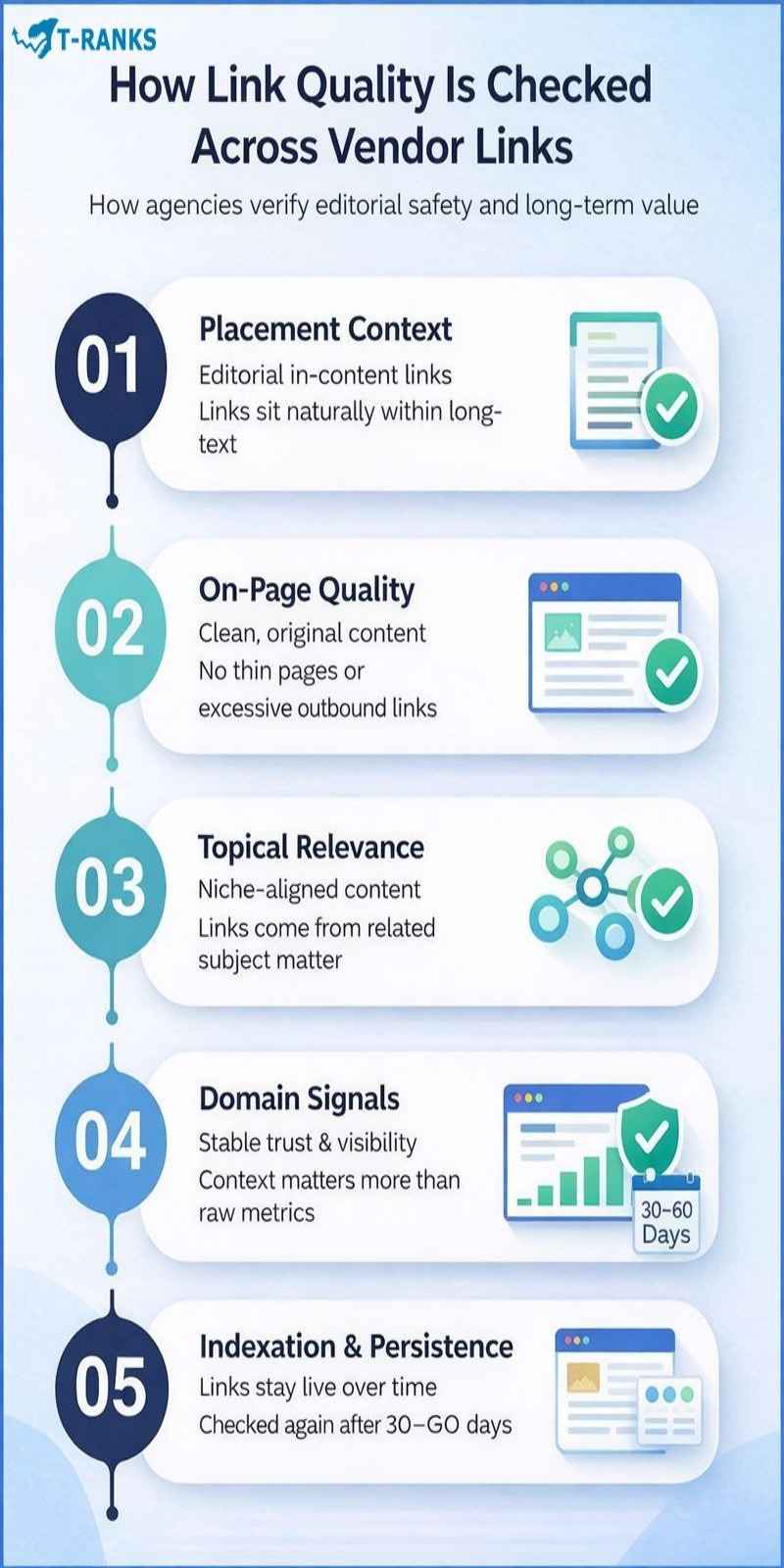
Evaluating link quality starts by confirming whether a backlink behaves like a genuine editorial mention. Agencies do not judge quality from a single example. They review multiple links to understand how natural, consistent, and sustainable a vendor’s placements are across different sites.
Step 1: Review link placement context
Agencies manually inspect a sample of links to see where they appear within the article. A quality link should sit inside the main body text and support the surrounding discussion. Links placed in author bios, footers, or unrelated paragraphs often signal paid or automated placement.
They also check how naturally the link fits the sentence. A simple test is to remove the link. If the paragraph still reads smoothly, the placement is likely editorial rather than forced.
Step 2: Analyze the on-page environment
Next, agencies review the quality of the page itself. Legitimate websites publish original, topic-specific content and link out sparingly. Low-quality sites often show thin writing, recycled layouts, or identical formatting across multiple domains.
Common warning signs include pages with excessive external links, articles linking to unrelated niches, and repeated page structures that suggest a controlled network.
Step 3: Check topical match and relevance
Each backlink should come from content closely related to the client’s niche. Agencies verify whether the site’s overall topic aligns with the link target. For example, a marketing business should earn links from business, marketing, or analytics content, not from unrelated categories like travel or health.
Step 4: Evaluate domain and page signals together
After manual checks, agencies review supporting signals such as authority trends, trust indicators, and organic visibility. A moderately strong site with stable traffic is often safer than a high-metric site with no real audience. Context and behavior matter more than raw numbers.
Step 5: Monitor indexation and persistence
Quality links continue to pass value weeks after placement. Agencies recheck links after 30 to 60 days to confirm the page remains indexed and the link is still live. Links that disappear or get removed quickly usually indicate low-trust placements. Vendors with high link persistence are preferred long-term partners.
Step 6: Cross-compare multiple links from the same vendor
Agencies evaluate several links from different campaigns to detect patterns. If links repeatedly use the same templates, anchors, or layouts, the vendor may be operating a private network. Genuine outreach produces natural variation in tone, structure, and formatting across placements.
By following this inspection process, agencies identify vendors capable of long-term, editorial-safe link building. Link quality evaluation is based on evidence, not promises. Understanding how links are created and where they appear ensures every placement strengthens authority safely and sustainably.
Checking Domain History and Website Quality
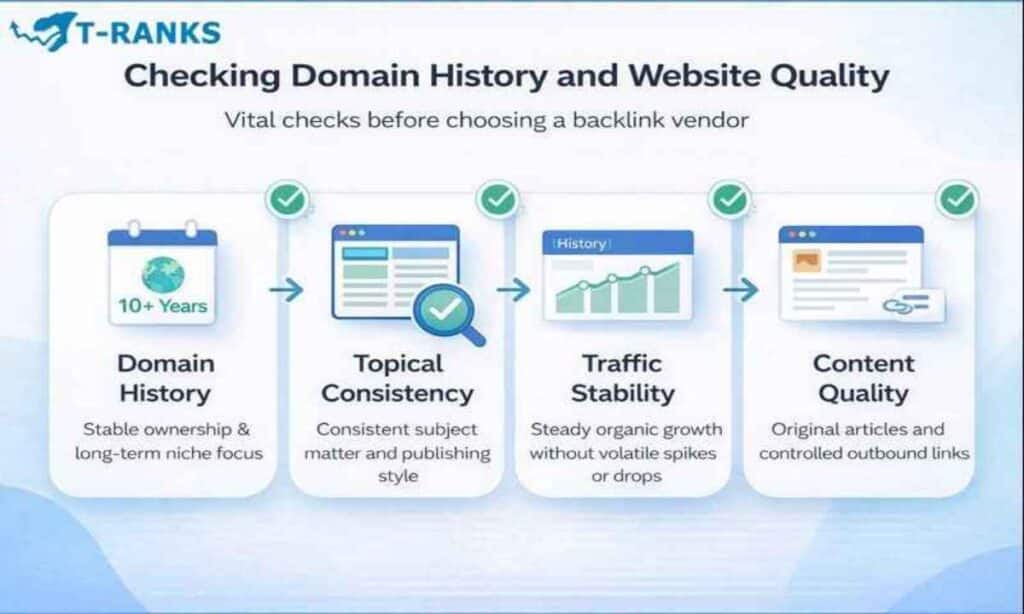
Before choosing a backlink vendor, agencies check whether the websites used for link placements have a clean and stable history. Domain history shows whether a site has stayed within one niche or has been recycled from expired domains. Sites with consistent publishing over several years are generally safer and pass stronger trust signals.
Agencies start by reviewing domain ownership and age. Domains that have remained under the same ownership for a long time are usually more reliable. Frequent ownership changes, hidden registration details, or recently registered domains often signal reused or low-quality assets.
Older versions of the site are then reviewed to confirm topical consistency. If a domain previously published unrelated content and suddenly changed niches, it may have been repurposed for link building. Consistent design, subject matter, and publishing style over time usually indicate genuine growth rather than manipulation.
Traffic history provides another layer of validation. Agencies look for steady organic visibility instead of sudden spikes or sharp drops. Abrupt traffic losses can indicate past penalties, while stable trends suggest a healthier site suitable for link placement.
Finally, agencies review the website’s current content quality. Legitimate sites publish original articles, maintain a clear structure, and link out sparingly to relevant sources. Spam-driven networks often rely on filler content and excessive outbound links across unrelated topics.
In short, a trustworthy domain shows stable ownership, consistent topical focus, real organic visibility, and authentic editorial activity. When backlink vendors use such domains, their links are more likely to stay indexed, age well, and provide lasting SEO value.
exactly what agencies look for before approving any vendor.
Why Relevance Matters More Than Authority
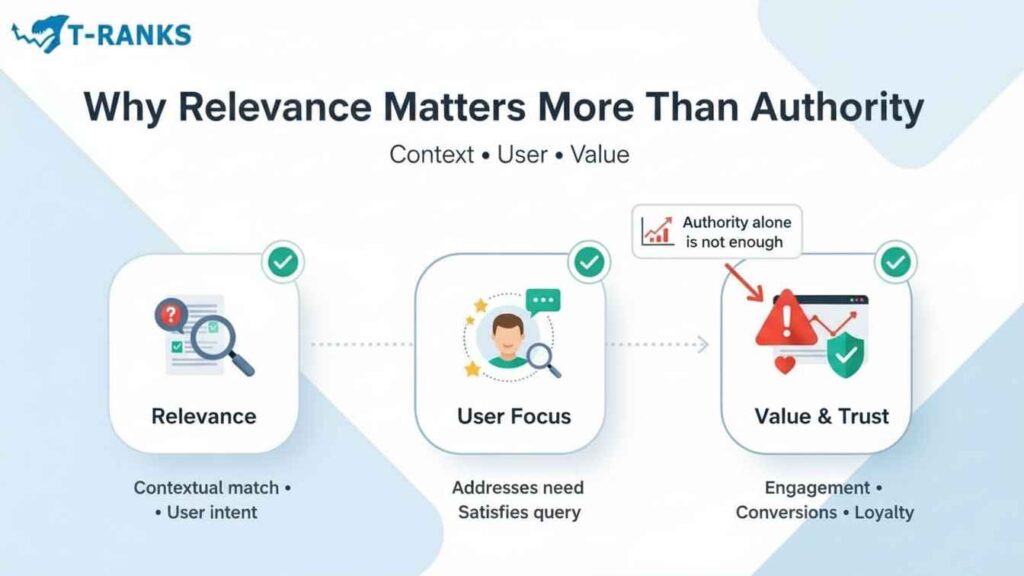
Relevance matters more than authority because search engines evaluate what a link means, not just how strong it looks.
When a backlink comes from a site that naturally fits the topic, it reinforces subject expertise. A high-authority but unrelated site sends mixed signals and can weaken topical trust.
Agencies evaluating backlink vendors prioritize relevance first because it determines whether a link blends naturally into the web ecosystem. Modern ranking systems rely on semantic and contextual understanding rather than raw authority metrics alone.
Context Determines Credibility
Search engines assess how closely the surrounding content matches the linked topic. A marketing article linking to another marketing resource strengthens trust. A fashion site linking to a B2B software guide looks forced and unnatural.
Relevance Builds Topical Authority
Repeated links from related sources signal that a site truly belongs in its niche. This creates a clear topical identity that scattered high-authority links cannot replace.
Irrelevant Authority Fades Faster
Links from off-topic domains are more likely to lose value during updates that target unnatural link patterns. A moderate-authority link from a relevant site often lasts longer than a higher-authority link from an unrelated network.
User Trust Follows Content Alignment
Readers engage more when the referral context makes sense. Relevant links attract clicks, longer engagement, and stronger brand signals, which support long-term SEO performance.
Vendors that claim to serve every niche usually rely on reused inventory and carry higher risk. Sustainable SEO growth comes from topical alignment, not broad authority metrics.
How Anchor Text Is Evaluated for Safety
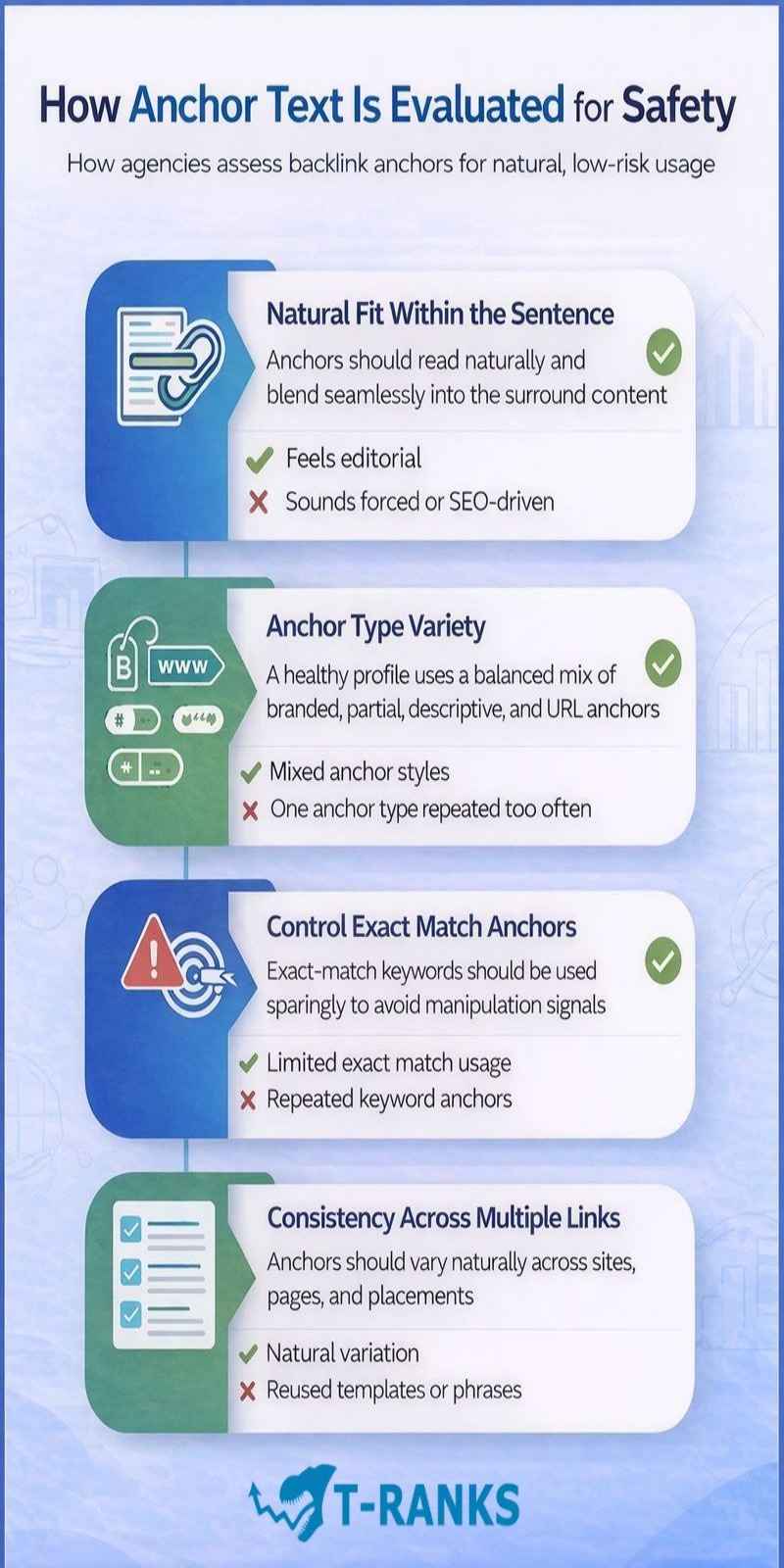
Agencies evaluate anchor text because it shows how carefully or aggressively a vendor tries to influence rankings. Search engines use anchor words to understand intent. When anchors look forced or repetitive, the links appear unnatural and risky.
Anchor safety is not about avoiding keywords completely. It is about using anchors in a way that looks natural, varied, and consistent with how real websites link.
Natural Fit Within the Sentence
The first check is whether the anchor fits naturally into the sentence. Agencies read real examples from a vendor’s past placements. Safe anchors flow with the content and feel like a normal editorial choice.
Risky anchors sound artificial and exist only for SEO. A phrase like “read our backlink vendor evaluation guide” feels natural. A long keyword packed phrase breaks the flow and signals manipulation.
If the sentence feels awkward without the link, the anchor was likely forced.
Anchor Type Variety
Healthy backlink profiles use different types of anchors. Agencies expect to see a balanced mix rather than one dominant style.
Common safe anchor types include brand names, partial keyword phrases, simple descriptive words, and plain URLs. This variety reflects how people link naturally when they are not trying to manipulate rankings.
When one anchor type appears too often, especially keyword focused anchors, it increases risk.
Controlling Exact Match Anchors
Exact match anchors receive extra attention because they carry higher risk. When the same keyword appears repeatedly across many links, it signals intentional manipulation.
Agencies prefer exact match anchors to remain a small portion of the overall profile. Branded and descriptive anchors should appear more often. This balance protects the site from pattern based detection.
Consistency Across Multiple Links
Agencies do not judge anchors from one example. They review multiple links from the same vendor across different sites.
They check whether anchors repeat the same phrases, whether they match the surrounding content, and whether the overall mix looks natural across ten or more placements. Real outreach always produces variation.
What Anchor Safety Reveals About the Vendor
Anchor safety reflects a vendor’s discipline and control. Vendors who plan anchors carefully and match them to context show long term thinking.
Vendors who reuse the same keyword phrases across many sites rely on automation or weak oversight. Agencies avoid these vendors because anchor patterns are easy for search engines to detect.
How Traffic and Visibility Are Interpreted
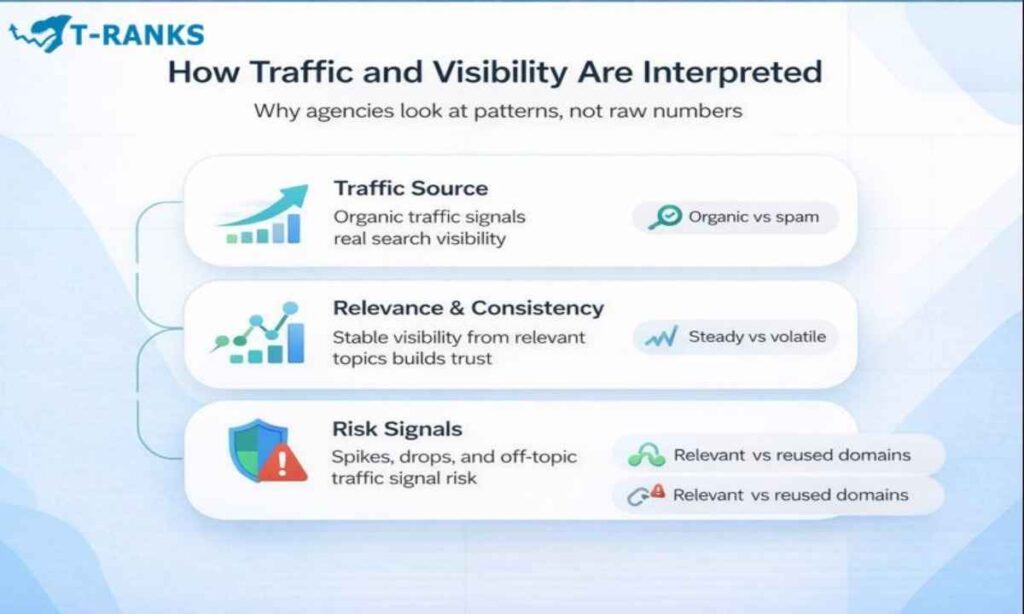
When agencies evaluate backlink vendors, they look at traffic and visibility as signs of whether a vendor’s network consists of real, active websites or recycled, artificial ones. These metrics help confirm if the domains used for link placements still earn genuine attention from search engines and readers.
A site doesn’t need massive traffic to be valuable. What matters is that its visibility is stable and organic. Agencies check patterns — not totals. If a domain shows consistent traffic from relevant keywords over several months, it’s likely safe. If traffic spikes suddenly, drops fast, or comes from unrelated topics, it suggests manipulation or expired-domain reuse.
During vendor reviews, teams often pull small samples of linking sites and check:
- Traffic source – is it organic or referral spam?
- Keyword relevance – are visitors coming for topics close to the client’s niche?
- Trend consistency – is visibility steady, or does it rise and fall sharply?
These checks reveal how well a vendor maintains quality across their network. Vendors using genuine websites usually show slow but steady growth; those relying on PBNs or link farms show traffic instability and volatile keyword rankings.
Agencies don’t reject a vendor for low traffic alone — small sites can produce strong, trusted links. They reject vendors whose sites show irregular or suspicious behavior because these patterns risk deindexation or penalty cascades. Traffic, therefore, acts as a trust signal, not a success metric.
In short, real traffic confirms a vendor’s sites are indexed, read, and trusted. It shows the backlinks placed there will stay visible and valuable — which is exactly what agencies need from a long-term partner.
Why Transparency Matters When Choosing a Vendor
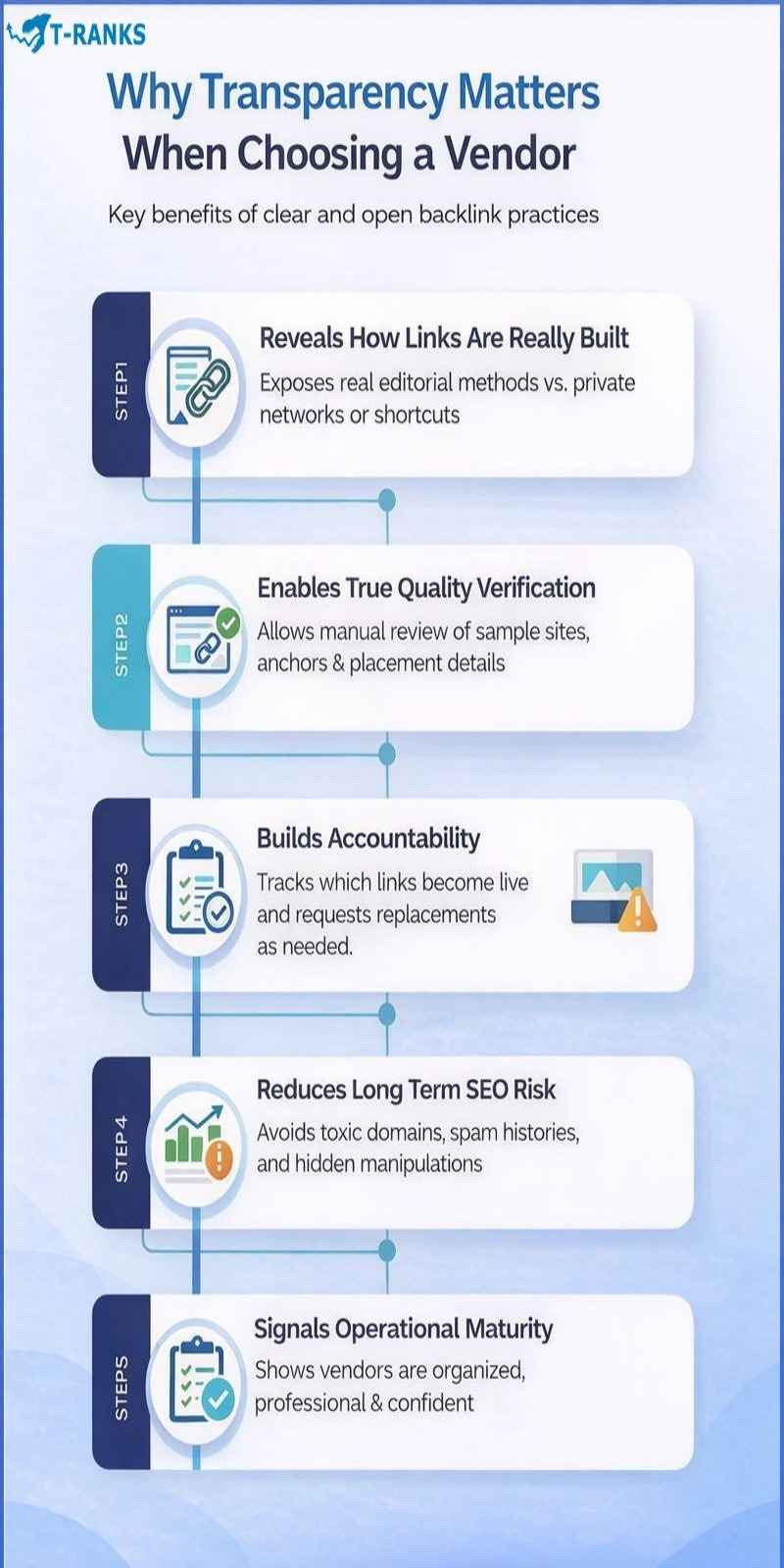
Transparency matters because it protects agencies from hidden risk and turns backlink quality into something measurable rather than guesswork. When a vendor is open about where and how links are placed, agencies can verify standards, enforce accountability, and scale with confidence.
Reveals How Links Are Really Built
Clear explanations of outreach, content creation, and placement methods show whether links come from real editorial opportunities or from private networks, expired domains, or link farms. Transparency exposes shortcuts before they become problems.
The following factors explain why transparency is critical in backlink vendor evaluation.
Enables True Quality Verification
When vendors share sample sites and detailed reports such as URLs, anchors, and publication dates, agencies can manually review relevance and placement quality. This removes reliance on screenshots, promises, or vague assurances.
Builds Accountability
Transparent reporting makes it easy to track which links went live, which changed, and which were removed. This allows agencies to hold vendors responsible and request replacements when agreements are not met.
Reduces Long Term SEO Risk
Full visibility into sites and methods helps agencies avoid domains with spam histories, recycled ownership, or aggressive tactics that may trigger penalties later. Transparency acts as an early warning system.
Supports Smarter Scaling
When agencies understand which sites, topics, and placements perform best, they can expand what works and stop what does not. Transparent vendors become long term partners rather than one time link sellers.
Signals Operational Maturity
Vendors who document their process, share data, and answer detailed questions confidently usually have real systems behind their work. Secrecy often signals shortcuts or lack of control.
Can the Vendor Scale Without Causing Problems
Agencies do not only ask whether a vendor can place good links. They ask whether the vendor can keep placing good links as campaigns grow. Scaling is where many backlink vendors fail.
A strategy that looks safe at a small volume can become risky when link counts increase. Problems usually appear when vendors reuse the same sites, push links too fast, or lower quality standards to meet volume targets.
Ability to Use Enough Unique Domains
A scalable vendor works with a large number of real websites. If a vendor serves many clients but relies on a small group of domains, those sites get reused across campaigns. This creates clear patterns that search engines can detect.
Safe scaling requires fresh and varied domains, not a fixed network used again and again.
Controlled Link Delivery Over Time
Healthy link growth happens gradually. Agencies expect links to be placed over weeks or months, not all at once. Large link bursts for small or new sites usually signal automation or forced placements.
Reliable vendors adjust link pace based on the site’s age, authority, and existing backlink profile.
Consistent Quality at Higher Volumes
Agencies compare early links with later batches to check quality consistency. If later links come from weaker or unrelated sites, the vendor may be stretching beyond their capacity.
Strong vendors maintain the same standards for relevance, content quality, and anchor safety even as monthly link volume increases.
Clear Capacity Planning
Scalable vendors can explain their limits clearly. They know how many links they can deliver safely, how many unique domains they can use in a niche, and how they avoid overusing the same sites for one client.
Vendors who cannot answer these questions directly are not prepared for controlled growth.
A scalable backlink vendor increases volume without changing tactics, lowering standards, or creating unnatural patterns. The goal is not just more links. The goal is more links that continue to look natural and earned as campaigns expand.
How Pricing Is Used to Judge Vendor Risk
Agencies use pricing to understand how a backlink vendor operates behind the scenes. The goal is not to find the cheapest option, but to check whether the price matches the effort required to build safe and real links.
What Very Low Pricing Usually Signals
When backlink pricing is extremely low, it often indicates shortcuts. Real link building requires research, content creation, editor communication, and placement management. Vendors who charge unusually low rates usually reduce costs by reusing the same sites, relying on low quality blogs, or automating placements.
These methods save time and money for the vendor, but they increase risk for the client.
Why Fair Pricing Makes More Sense
Higher or reasonable pricing does not guarantee quality, but it becomes meaningful when the vendor can explain it clearly. Safe vendors can describe what is included in the price, why some sites cost more than others, and how much control the client has over anchors and placements.
Clear pricing logic usually reflects real effort and structured processes.
Pricing Patterns Agencies Treat as Red Flags
Agencies watch for pricing structures that indicate risk. Common warning signs include one flat price for all niches, large link bundles offered cheaply, and unclear policies for replacements when links are removed or lost.
These patterns often signal low control and reused inventory.
In simple terms, safe link building is never extremely cheap, and trustworthy vendors can justify their pricing without hesitation. Agencies use pricing to identify vendors who cut corners and avoid them before problems appear.
Why Trial Orders Are Important
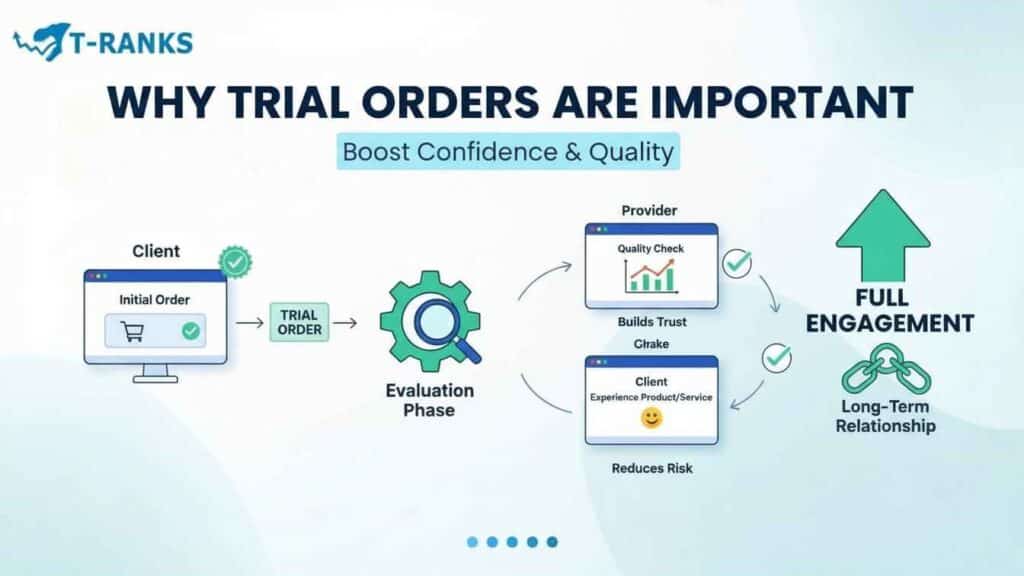
Agencies use trial orders to test a backlink vendor in a low‑risk way before committing real budget. Instead of buying dozens of links upfront, they start with a small batch to see how the vendor actually performs.
A trial order shows what the vendor does in real conditions, not just in sales talk. Agencies check:
- Are the promised sites real, relevant, and indexed?
- Does the content read well and fit the link naturally?
- Are anchors used safely and realistically?
- Does reporting match what was agreed?
Trials are judged over weeks, not days. After links go live, agencies watch whether the pages stay indexed, whether links remain in place, and whether there are any early ranking or visibility improvements. If links start disappearing, move to different pages, or appear on weaker sites than promised, the vendor fails the test.
If the trial links look good and stay stable, agencies gain confidence that the vendor can be trusted with larger orders. If problems appear in a small test, the loss is limited and the agency knows not to scale with that provider.
In short, trial orders act as a safety filter. They let agencies confirm quality, communication, and reliability on a small sample before turning a vendor into a long‑term partner.
Red Flags That Disqualify Backlink Vendors
When agencies evaluate backlink vendors, some warning signs are strong enough to reject a vendor immediately. These red flags usually indicate risky methods, poor quality control, or tactics that can harm rankings over time.
The following warning signs clearly indicate when a backlink vendor should be avoided.
Guaranteed Rankings or Traffic
Any promise of guaranteed rankings or traffic is a major warning sign. Claims like reaching number one in Google within a fixed time frame ignore how search rankings actually work. No honest vendor can control results that depend on many factors beyond links alone.
Fixed Authority Promises
Statements such as all links being from DA or DR sites above a certain number are misleading. Authority metrics change over time and can be inflated. Vendors who focus only on numbers often ignore relevance, context, and real editorial value.
No Clear Explanation of Methods
Vendors who refuse to explain how links are earned raise immediate concerns. A lack of clarity about outreach, content placement, or site selection often hides the use of private networks, expired domains, or automation.
Same Sites Used Across Many Niches
When the same domains are offered for finance, health, tech, and unrelated industries, it usually means the vendor controls a network of sites. Real websites focus on specific topics and audiences, not every niche at once.
No Replacement or Accountability Policy
Vendors who do not offer link replacements or clear accountability if links are removed shift all risk to the client. Agencies avoid vendors who refuse to stand behind their work.
Final Thoughts on Choosing a Backlink Vendor
Choosing a backlink vendor is not about buying links. It is about protecting your site’s long term visibility and trust. Agencies focus on patterns and processes, not short term wins. A vendor is only safe if they can repeatedly deliver relevant and natural links without creating footprints or relying on tactics that may be penalized later.
Strong vendors are easy to identify when you look at the full picture. Their sites have clean histories. Their links sit inside real editorial content. Their anchors are varied and readable. Their traffic is stable and organic. They are transparent about how they work, can explain their pricing, handle trials properly, and take responsibility when links change or disappear.
If you evaluate backlink vendors the same way agencies do, you avoid most costly mistakes. By focusing on quality, relevance, history, anchors, transparency, scalability, and risk signals, you stop chasing cheap metrics and quick gains. Instead, you build relationships with vendors who support steady rankings and sustainable growth over time.
FAQs About Backlink Vendor Evaluation
What is backlink vendor evaluation?
Backlink vendor evaluation is the process of assessing whether a link provider delivers safe, relevant, and consistent backlinks over time. It focuses on patterns and long term behavior rather than single link examples.
Why do agencies evaluate backlink vendors instead of just backlinks?
Agencies evaluate vendors because backlinks are delivered repeatedly across campaigns. A vendor’s process and consistency matter more than one strong link.
Are DA and DR enough to judge a backlink vendor?
No, DA and DR are not enough to judge a backlink vendor. These metrics can be inflated and do not reflect relevance, placement quality, or long term risk.
How do agencies check the quality of links provided by a vendor?
Agencies review placement context, site relevance, outbound link behavior, and consistency across multiple links. One good link is never enough for approval.
Do agencies use backlink tools to evaluate vendors?
Yes, agencies use backlink analysis tools to verify data, but tools are only a starting point. Final decisions are based on patterns, context, and repeat performance.
Why is domain history important in backlink vendor evaluation?
Domain history matters because reused or recycled domains often carry hidden risk. Stable domains with consistent topics are generally safer.
How important is topical relevance when evaluating a backlink vendor?
Topical relevance is critical because links from unrelated niches increase risk. Consistent relevance signals safer and more durable link building.
How do agencies evaluate anchor text safety from vendors?
Agencies evaluate anchor safety by checking diversity and natural usage. Vendors that push aggressive or repetitive exact match anchors are usually rejected.
Does website traffic prove a backlink vendor is safe?
No, website traffic alone does not prove safety. Stable and organic visibility is more reliable than sudden spikes.
Why is transparency critical when choosing a backlink vendor?
Transparency is critical because reliable vendors explain how links are built and provide clear reporting. Vague or secretive processes signal higher risk.
Is cheap backlink pricing a red flag?
Yes, extremely cheap pricing is often a red flag. Low cost usually indicates low control, reused sites, or automation.
Why do agencies start with trial orders when evaluating vendors?
Agencies start with trial orders to reduce risk and observe consistency. Vendors are approved based on performance over time, not instant results.