Shopify link building matters more in 2026 than at any time before. Search engines are no longer the only places where customers discover brands. LLMs like ChatGPT, Perplexity, and Google’s AI Overviews pull information from trusted websites, citations, and strong backlinks. If your Shopify store isn’t being referenced across the web, these systems simply won’t recognize your brand as an authority.
Ranking your collections, products, and blogs now requires more than good content or fast loading speeds. You must earn relevant, trustworthy links that signal to Google and modern AI models that your store is real, credible, and worth recommending. Without strong backlinks, even great Shopify stores struggle to appear in competitive search results.
Modern Shopify link building isn’t about chasing random links or outdated directory submissions. It’s about earning high-quality mentions from niche blogs, influencers, journalists, and platforms related to your industry. These natural references strengthen your brand signals, improve your visibility across search and AI systems, and make your rankings more stable during algorithm updates.
This guide shows you how to build safe, effective backlinks for your Shopify store using methods that work in today’s search environment. Each strategy is practical, beginner-friendly, and designed to help your store gain long-term authority without risk.
What Is Shopify Link Building
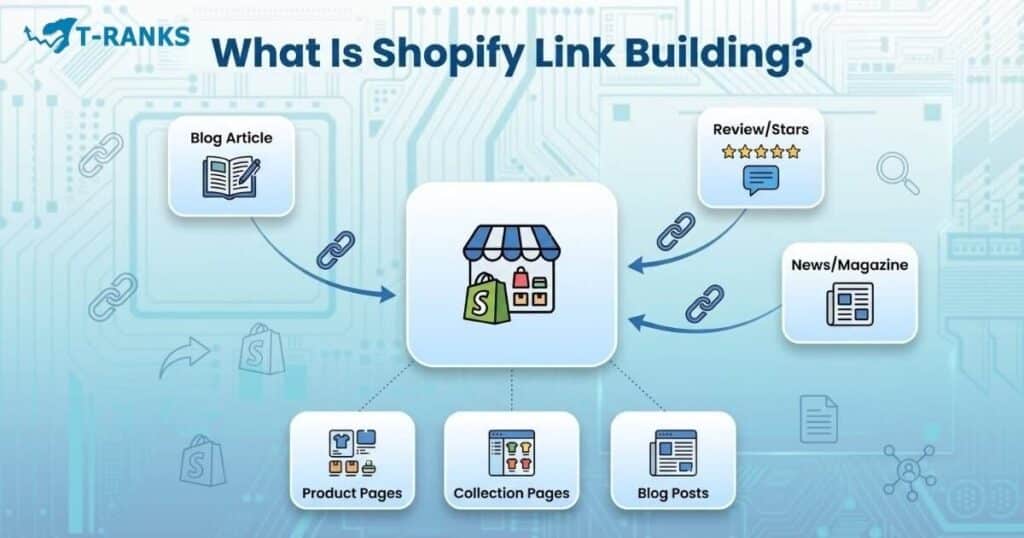
Shopify link building is the process of earning high-quality backlinks that point to your Shopify store’s products, collections, and content. These backlinks act as trust signals that help Google understand your store’s authority, relevance, and overall commercial value. Because Shopify uses a fixed page structure, your link-building strategy must be designed to strengthen the right pages and guide link equity through your store in a natural way.
Shopify link building is not just “getting links.” It is the practice of selecting the right pages, attracting relevant referrals, and building a link profile that supports product rankings, collection visibility, and long-term store growth.
Understanding Backlinks in the Shopify SEO Ecosystem
Backlinks are simply hyperlinks from one website to another. In Shopify SEO, they act like public recommendations. When a reputable site links to your store, Google interprets it as a sign that your brand is trustworthy and worth showing to more shoppers.
Strong backlinks help your Shopify store by:
- Helping Google discover new products and collections faster
- Strengthening the authority of product, collection, and blog pages
- Improving your brand’s credibility across your entire niche
- Sending targeted visitors who are already interested in what you sell
Backlinks form the foundation of visibility for Shopify stores because they compensate for common limitations like thin product descriptions, duplicate product variants, and strong competition from marketplaces.
How Shopify Link Building Differs from General eCommerce SEO
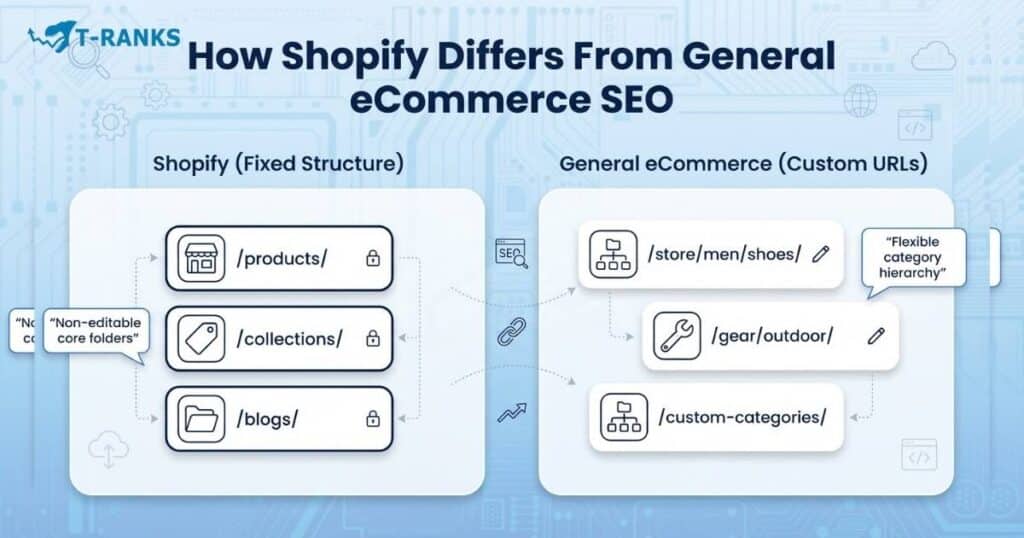
Shopify link building is different from general e-commerce SEO because Shopify uses a fixed URL structure that controls how link authority flows across your store.
Unlike platforms such as WooCommerce, Magento, or custom e-commerce setups where you can modify category paths and URLs, Shopify keeps all core folders locked — /products/, /collections/, and /blogs/.
Because of Shopify’s fixed layout:
- You must choose link targets more strategically, since you cannot create custom category hierarchies.
- Collection pages become the safest and strongest backlink targets, similar to category pages on traditional e-commerce sites.
- Product pages perform better when supported by internal links from collections and blogs instead of relying on many direct backlinks.
- Link equity depends on strong internal linking, which connects products, collections, and blog posts in a simple and predictable structure.
In simple words, Shopify link building is less about custom URL control (like general e-commerce) and more about placing backlinks in the right locations so authority spreads efficiently across your store.
How Backlinks Interact With Shopify’s Technical Structure
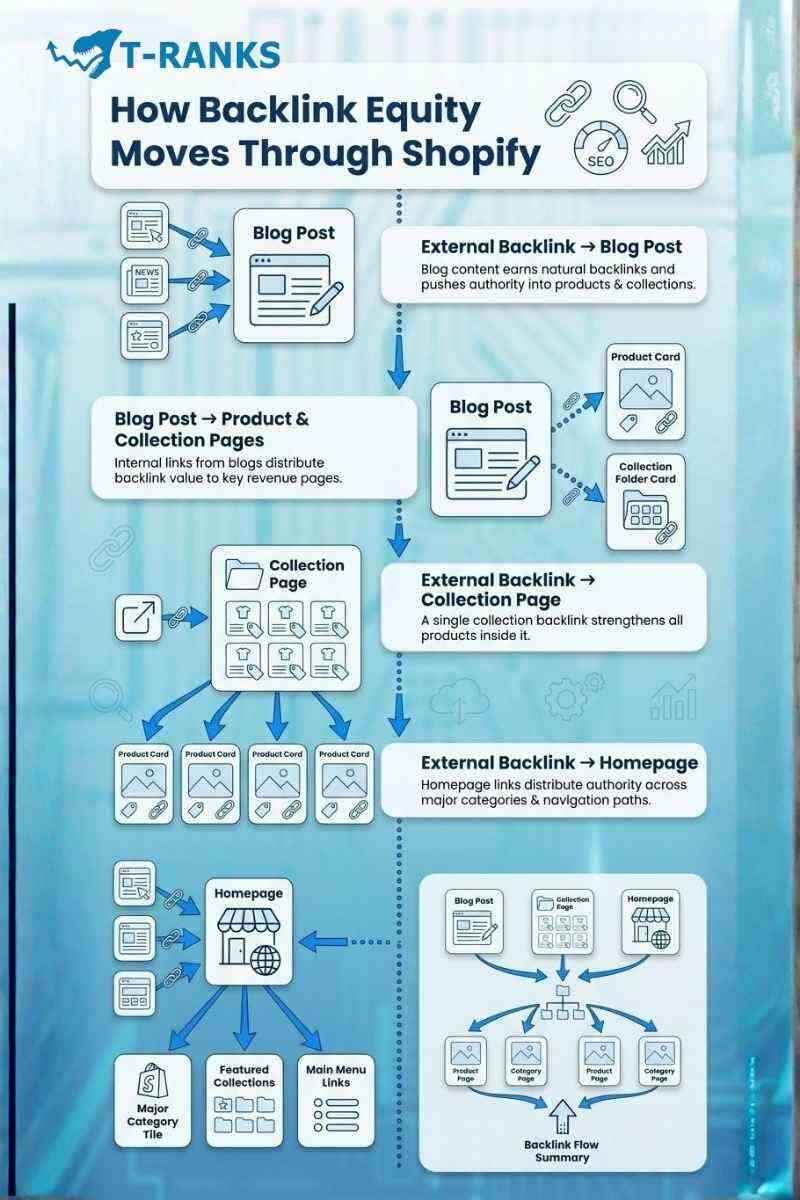
Backlink value flows differently through a Shopify store compared to a custom-built ecommerce site. Each page type has a distinct role in distributing authority.
Here’s how link equity moves inside Shopify:
Collection Pages
- Often the best link targets because they group related products
- One strong backlink can strengthen an entire category
- Great for keyword-rich topics like “running shoes,” “kitchen accessories,” “pet supplies”
Product Pages
- Benefit from direct backlinks but only when they are high quality
- Become stronger when they receive internal links from collections and blogs
- Best used for commercial-intent keywords after authority is established
Blog Posts
- Easiest pages to earn natural backlinks
- Excellent for informational keywords, storytelling, and expert content
- Pass authority effectively to products and collections through internal links
Together, these three page types allow your Shopify store to grow even when only one receives a backlink. The internal link structure does the rest.
Why Link Building Is Critical for Shopify Stores
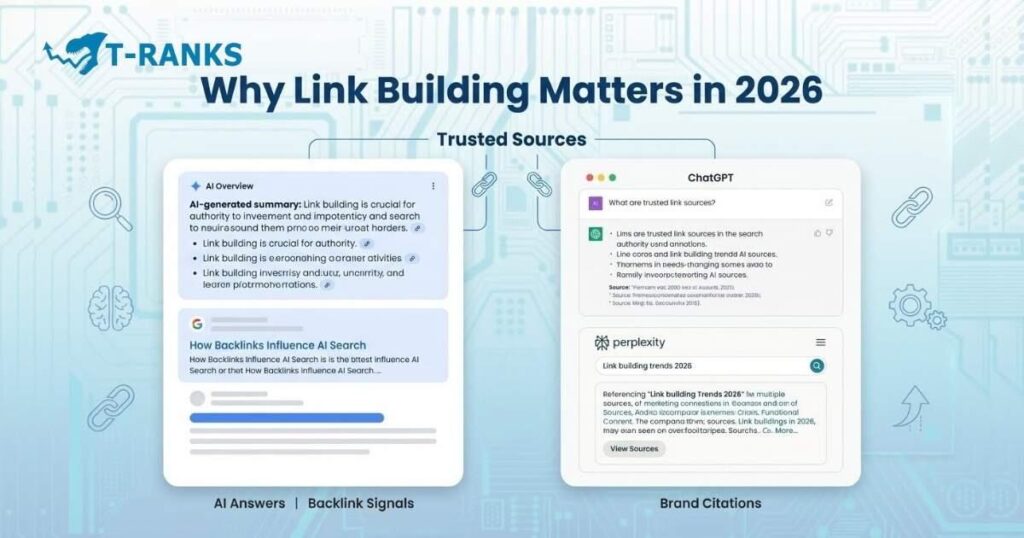
Link building is essential for Shopify stores because it increases authority, improves rankings, speeds up indexing, and drives consistent sales without relying only on ads. In 2026, Google evaluates Shopify stores heavily based on trust signals that come from external backlinks. When reputable websites link to your store, it strengthens your visibility, authority, and long-term ranking stability.
Below are the key reasons link building matters specifically for Shopify SEO.
Increases Domain Authority and Search Visibility
High-quality backlinks increase your store’s authority and help your pages rank across collections, products, and content. Google treats each backlink as a quality signal that your brand is trustworthy and useful.
- Higher domain authority (DA/DR)
- Better rankings for competitive eCommerce queries
- Wider visibility for collection and product pages
- Greater chances of appearing in AI-powered search results
- Stronger ability to compete against big brand
Drives High-Intent Referral Traffic
Backlinks from niche-relevant websites send targeted visitors to your store. These visitors already have interest in your niche, so they convert better than cold traffic.
- Visitors who are actively researching your products
- Higher conversion rates compared to paid ads
- Lower dependency on advertising budgets
- More brand exposure in your category
Improves Product and Collection Indexing Speed
A strong backlink profile helps Google crawl and index your Shopify store more frequently. This means new or updated pages appear in search results sooner.
- Faster visibility for new product pages
- On-time indexing for trending or seasonal items
- Quicker recognition of new blog posts
- Improved crawl frequency for stores with many SKUs
Boosts Brand Credibility and Trust Signals
Backlinks from respected websites act as endorsements. Shoppers trust your brand more when they see it mentioned across credible blogs, magazines, or influencers.
- Stronger first impressions
- Better alignment with Google’s E-E-A-T standards
- Higher trust during the research and comparison stage
- A more authoritative online presence
Strengthens Your Conversion Funnel
Higher rankings naturally lead to more qualified shoppers entering your sales funnel. Organic and referral visitors convert better and cost less to acquire.
- Better visibility for high-intent keywords
- Warm traffic that is easier to convert
- Reduced customer acquisition cost over time
- More stable sales without relying on ads
Enhances Link Equity Flow Across Shopify
Shopify’s structure connects collections, products, and blogs. When external backlinks point to any core page, link value flows through your internal linking system.
- A linked collection strengthens all products inside it
- A linked blog post supports related items and collections
- A linked homepage improves authority across the store
- Strong internal links push ranking power to money pages
This creates a multiplier effect where one good backlink can lift multiple important pages.
How to Evaluate Backlink Quality for Shopify SEO
To build a strong and safe backlink profile, you must know how to judge link quality. The best backlinks are relevant, trustworthy, and placed naturally within helpful content. A single strong link is far more valuable than many weak ones. Here are the simple but powerful methods we use at T-Ranks to check whether a backlink is truly high quality
Authority Metrics (DR, TF, Referring Domains)
Authority metrics help you quickly check how trustworthy a linking website is.
Key signals:
- DR (Domain Rating): Shows overall backlink strength. Higher DR = stronger site.
- TF (Trust Flow): Measures how trustworthy a site is based on who links to it.
- Referring Domains: More unique sites linking to a domain usually means higher credibility.
What matters most:
Choose sites with real traffic, solid authority, and a clean backlink profile.
Contextual Relevance and Anchor Placement
A good backlink must be relevant to your niche. Google gives more value to links that naturally fit the content.
A high-quality link is:
- From a site related to your product or industry
- Placed inside the main content (not footer or sidebar)
- Surrounded by helpful, relevant text
Anchor text should be:
- Natural
- Clear and descriptive
- A mix of branded, generic, and light keyword anchors
Relevance is the strongest quality signal.
Dofollow vs Nofollow Links for eCommerce
Dofollow links:
- Pass ranking power
- Directly help SEO
Nofollow links:
- Do not pass authority
- Still bring traffic and keep your profile natural
A healthy mix of both (roughly 70/30) is ideal.
Avoiding Link Spam and Shopify Backlink Risks
Low-quality backlinks can harm your store, lower rankings, or trigger penalties.
Avoid links from:
- Irrelevant or spammy websites
- Sites with thin, low-quality content
- PBNs or paid link schemes
- Pages filled with too many outbound links
Protect your store by:
- Auditing backlinks regularly
- Removing or disavowing harmful links
- Only earning links from trusted, relevant sources
A clean backlink profile keeps your Shopify store safe and strong long-term.
Types of Backlinks That Work Best for Shopify
The best backlinks for Shopify stores come from real websites, genuine mentions, and high-quality content placements. These links are safe, natural, and help increase your store’s authority, traffic, and long-term ranking power. Below are the backlink types that consistently deliver the strongest results for Shopify SEO.
Editorial and Resource Backlinks
Editorial backlinks come from websites that mention your store because your content, product, or guide is genuinely helpful. These are some of the strongest links for any Shopify store.
They usually appear in:
- Product roundups
- How-to guides
- Comparison articles
- Resource pages
- Expert tip lists
You can earn these backlinks by publishing helpful content such as buying guides, tutorials, niche tips, and product comparisons. Stores that create useful blog content naturally attract these editorial mentions.
Product Review and Influencer Backlinks
These backlinks come from bloggers, influencers, and YouTubers who review or feature your products. They bring traffic from people who are already interested in buying.
They are valuable because they drive:
- High-intent referral visitors
- Strong niche relevance
- Higher conversions
- Long-lasting visibility from evergreen review pages
Even one review on a trusted niche blog can bring consistent traffic and boost your authority.
Brand and Manufacturer Backlinks
If you’re an approved retailer or partner for certain brands, you can often earn backlinks directly from their websites. These backlinks come from reputable, high-authority domains and instantly strengthen your store’s trust signals.
They help by:
- Adding credibility
- Improving brand trust
- Sending authority to your core pages
- Strengthening your store’s overall link profile
Partner and manufacturer links are some of the safest links you can acquire.
Internal Shopify Backlinks (Collections → Products → Blogs)
Internal links inside your Shopify store are just as important as external backlinks. They help Google understand your structure and ensure link equity flows properly across collections, products, and blogs.
Good internal linking supports:
- Faster indexing for new products
- Higher rankings for important pages
- Clear site structure for Google
- Better use of every external backlink you earn
When internal links are set up correctly, one strong backlink can strengthen multiple pages across your store
Shopify Link Building Strategies That Work in 2026
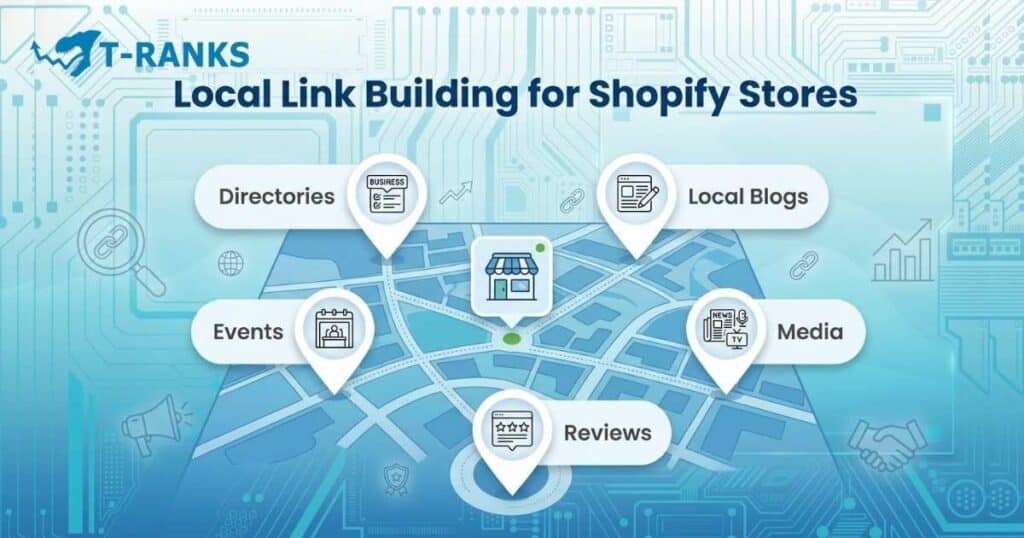
Here at T-Ranks, we follow a simple but effective link-building process designed specifically for Shopify stores. These strategies focus on creating real value, earning natural mentions, and using Shopify’s structure to get the most out of every link you build. The steps below show exactly how to build strong, safe backlinks that support long-term growth.
Shopify Link Building Strategies That Work in 2026
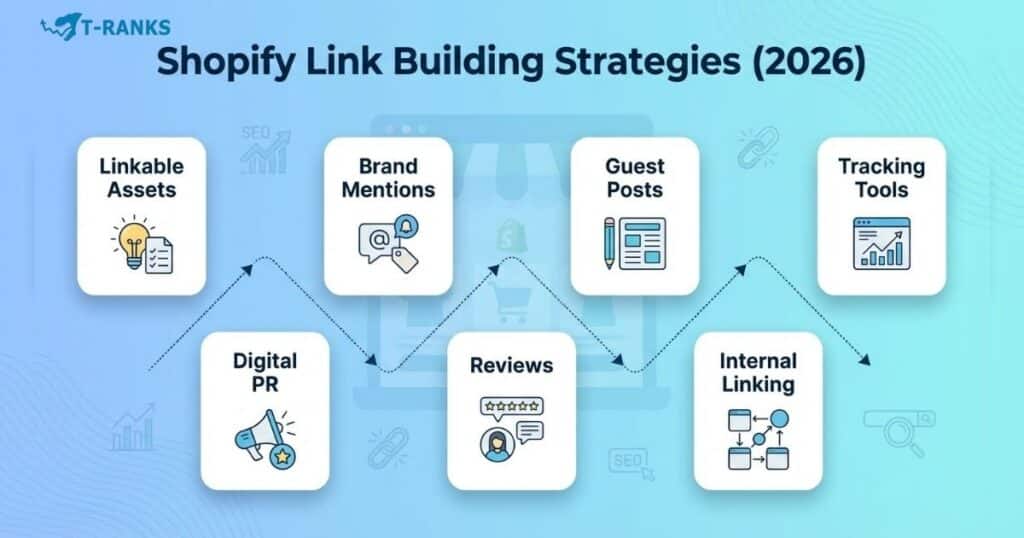
The best Shopify link building strategies in 2026 focus on earning real mentions from relevant sites, supporting them with strong content on your store, and using Shopify’s structure to push that authority into your collections and product pages. Instead of chasing random backlinks, you focus on a few reliable methods that are repeatable, safe, and aligned with how Shopify stores are built.
At T-RANKS, we use a simple set of strategies that work for most Shopify brands, from small niche stores to larger eCommerce sites. Below are the ones we recommend for building long term authority.
1. Create Linkable Assets Around Collections and Buying Guides
One of the safest ways to earn backlinks to a Shopify store is to publish content that genuinely helps people make better buying decisions.
Practical ideas
- Comparison guides such as “Best Winter Jackets For Commuters”
- Gift guides that group products by use case or budget
- “How to choose” tutorials that solve real buying problems
- Simple tools or checklists that readers can download
You then link from these guides to your collections and products. Bloggers, reviewers, and journalists are far more likely to link to a useful guide than to a raw product page, and the authority still flows into your store through internal links.
2. Use Digital PR, Stories, and Niche Partnerships
Digital PR is no longer only for big brands. Even small Shopify stores can earn strong links by sharing real stories and useful data.
Examples
- Share a small study based on your customer data or surveys
- Pitch your founder story to niche podcasts or industry blogs
- Partner with a charity or local event and get listed on their site
These links usually land on your homepage, an About page, or a key content asset. They are some of the strongest editorial backlinks you can earn, and they improve both rankings and brand trust.
3. Turn Unlinked Brand Mentions Into Backlinks
Many Shopify brands are already mentioned online without getting a clickable link. This is one of the easiest wins.
Simple workflow
- Search the web for your brand name and product names
- Collect pages that mention you but do not link
- Send a short, polite email asking them to add a link for reader convenience
Because they already chose to talk about you, the success rate is much higher compared to cold outreach. These are quick, safe links that support your entity and brand authority.
4. Earn Reviews and Features From Creators and Niche Blogs
Review backlinks and creator features work extremely well for Shopify. They send warm traffic and strong relevance.
You can
- Offer free samples to niche bloggers or micro influencers
- Pitch your product for “Top X” roundups in your category
- Create a special landing page for reviewers with assets and product info
The goal is not to buy links, but to make it easy for creators to review you and naturally link back to your store or a specific collection.
5. Guest Posts on Shopify and eCommerce Relevant Sites
Guest posting still works when it is focused, relevant, and done with care.
How to use it for Shopify
- Target blogs that talk about your exact niche, not general SEO sites
- Pitch educational topics, not product promotions
- Link once to a helpful guide or collection page on your store
- Add one or two internal links within your store pointing from that page to key products
This keeps your guest posts editorial and valuable while still supporting your rankings.
6. Strengthen Internal Links With Smart Shopify Navigation
Every external link becomes more powerful when your internal links are strong. For Shopify, that means:
- Making sure collections link to products clearly
- Linking from blog posts to related collections and products
- Using “related products” and “featured collections” blocks to keep authority flowing
You do not always need heavy Liquid customisation. Often, small theme changes and better menus are enough to push link equity towards the pages that matter for revenue.
7. Use Apps and Tools to Track Links and Outreach
As your Shopify store grows, it becomes harder to track which backlinks you have and how they perform.
Helpful practices
- Use a free or paid backlink checker to monitor new and lost links
- Keep a simple sheet of outreach contacts, guest posts, and PR mentions
- Review your best links every few months and update the linked pages so they stay fresh and useful
Even light tracking makes your link building more strategic, not
Advanced Shopify Link Building Tactics
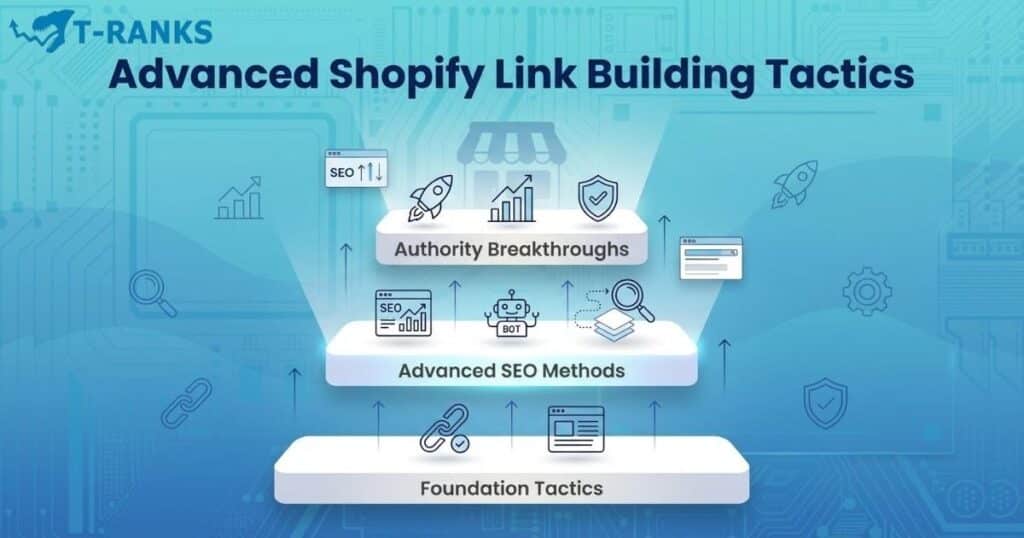
After building a solid foundation, you can use advanced strategies to earn stronger, harder-to-get backlinks that truly set your Shopify store apart. At T-Ranks, we use these higher-level tactics when a store needs to outperform strong competitors or grow authority faster. These methods help you earn powerful, editorial-grade backlinks that are difficult for others to copy and have long-lasting SEO impact.
Digital PR Campaigns and Product Collaborations
Digital PR helps you earn high-authority backlinks by making your brand newsworthy. Instead of requesting links, you create stories that journalists, bloggers, and niche publications naturally want to cover.
Effective ways to attract PR backlinks include
• Launching co-branded or limited-edition products that spark media interest
• Sharing original data, surveys, or industry insights from your store
• Responding to journalist requests through HARO and similar platforms
• Creating timely content tied to trends, awareness days, or breaking news
Why it works:
Digital PR earns the kind of authoritative editorial links that a normal outreach email can never secure. One good PR campaign can generate dozens of high-quality backlinks from respected websites, drastically boosting your store’s authority.
Leveraging AI and Automation for Backlink Analysis
AI tools make advanced link building easier by helping you find the right link opportunities faster and avoid low-quality websites.
AI helps you
• Discover websites that link to your competitors but not you
• Identify backlink gaps and missed opportunities
• Analyze which sites offer the highest ranking impact
• Personalize outreach messages based on each site’s content
• Predict link quality before investing time in outreach
Why it works
AI saves time on research and ensures you focus only on link sources with real value. You still write outreach manually to keep it human, but AI handles the heavy lifting behind the scenes.
Link Reclamation and Broken Link Outreach
Broken link building is one of the simplest and most reliable advanced strategies. It works by helping site owners fix dead links while earning a backlink for your store.
How to use it
• Find broken outbound links on niche websites using SEO tools
• Identify the closest matching page on your store
• Contact the site owner, mention the broken link, and offer your page as a replacement
You can also reclaim unlinked mentions. When someone talks about your brand but forgets to link to you, a short, polite message often turns that mention into a backlink with almost no resistance.
Why it works
This tactic earns natural, relevant links by solving a real problem for the site owner. It also requires far less effort than creating new content.
Building Shopify Backlinks with Multimedia (YouTube, Podcasts, Influencers)
Multimedia backlinks are often overlooked, yet they deliver strong authority and highly engaged traffic. Creators who publish content on multiple platforms usually add links in descriptions, show notes, or their blogs.
Ways to earn multimedia backlinks
• Send products to YouTubers for reviews or comparisons
• Join podcasts as a guest to share expertise or your founder story
• Partner with influencers who write blog posts, not just social posts
• Create visuals, guides, or tools that creators embed and link back to
Why it works
Backlinks from multimedia creators are natural, trustworthy, and spread across multiple sites. They also send warm traffic because the audience already trusts the creator.
Local Shopify Link Building Strategies
Local link building helps your Shopify store rank better for customers in your area, appear in “near me” searches, and build trust within your community. Even online-only stores benefit from local links because they strengthen your business identity, support Google Maps visibility, and reinforce that your brand is legitimate. Here are the trusted local link-building approaches we use at T-Ranks to secure high-value, location-based backlinks.
Local Directory Submissions
Local directories help Google verify your business details and strengthen your local SEO presence. They are the foundation of local link building.
Start with trusted directories such as
• Google Business Profile
• Yelp
• Bing Places
• Local Chamber of Commerce directories
• Industry-specific directories
Important practices
• Keep your NAP (Name, Address, Phone number) identical everywhere
• Avoid low-quality directories that look spammy
• Review your listings every few months to correct mistakes
A complete and consistent directory profile helps your Shopify store appear in local map results and builds credibility.
Collaborating With Nearby Businesses and Bloggers
Local collaborations create highly relevant backlinks and give your brand real visibility in your community.
You can
• Co-host small events or promotions with complementary businesses
• Exchange helpful guest posts with nearby stores
• Offer exclusive discounts to community groups or local clubs
• Partner with local bloggers to feature your products or story
These relationships naturally lead to backlinks because both sides benefit and want to share the partnership online.
Hosting or Sponsoring Local Events
Events create easy backlink opportunities because organizers list sponsors and participants on their event websites.
You can contribute by
• Sponsoring charity runs or community fundraisers
• Hosting in-store workshops, pop-ups, or free classes
• Participating in local fairs or markets
• Supporting school or youth sports programs
Event listings often include a link to your store, which provides strong local authority and brand exposure.
Getting Listed in Local News and Media
Local news outlets are always looking for interesting community stories, and they are far more approachable than national publications.
Effective pitch ideas
• Announcing a new product, service, or store launch
• Sharing your founder story or business milestone
• Highlighting a charity project or community initiative
• Commenting on local trends or seasonal events
• Partnering with another local business
Tips for success
• Keep your pitch short and focused
• Provide ready-to-use photos or quotes
• Send pitches to specific journalists, not generic emails
Local media coverage usually includes a high-quality backlink and positions your brand as part of the community.
Leveraging Customer Reviews and Case Studies
Local customers can become powerful advocates who help your store earn natural backlinks.
You can
• Ask customers with blogs or websites to share their experience
• Turn great customer stories into case studies
• Feature case studies on your blog and link to their businesses
• Encourage reviews on platforms like Google, Yelp, and niche sites
Case studies often get shared by the customers themselves and by local blogs, leading to organic, trust-building backlinks.
Tools and Resources for Shopify Link Building
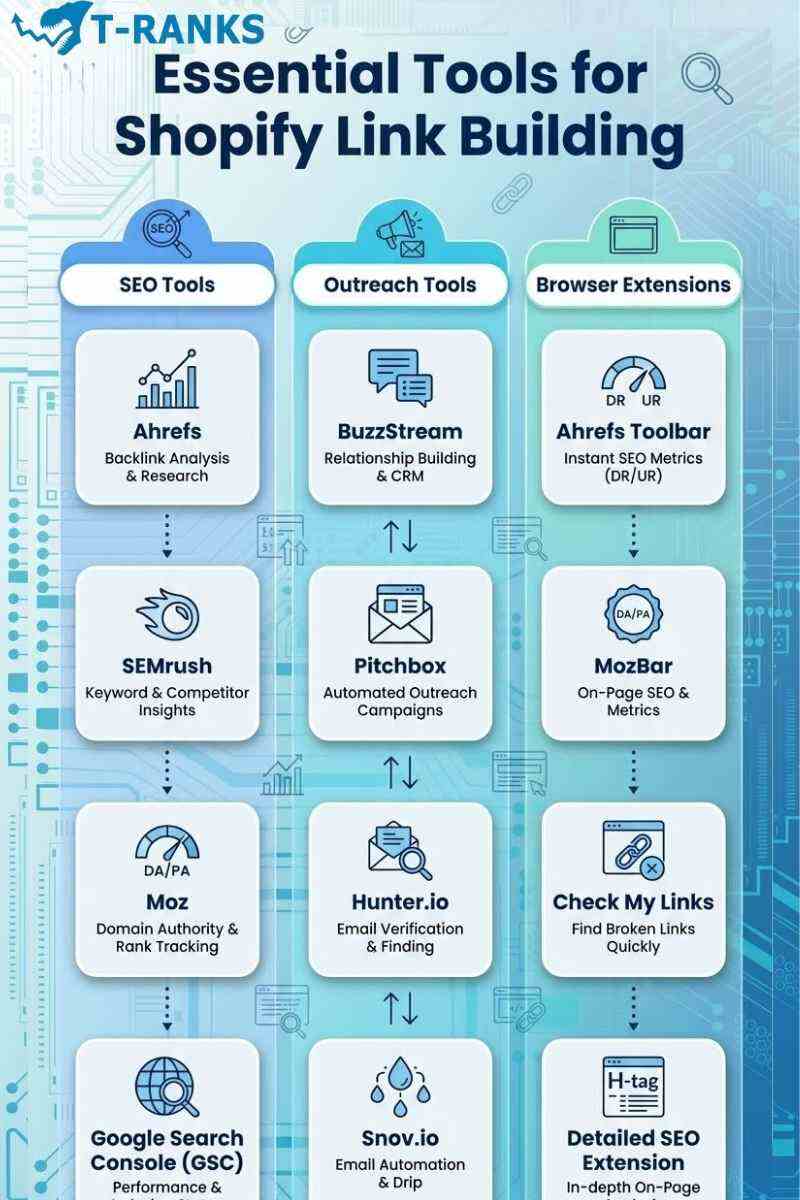
Having the right tools makes link building faster, easier, and far more accurate. At T-Ranks, we use a combination of backlink tracking platforms, outreach tools, and simple browser extensions to help Shopify stores find high-quality link opportunities and manage everything without overwhelm. Here are the tools that make the biggest difference.
Shopify SEO and Backlink Tracking Tools
These platforms give you a clear picture of your backlink profile, discover new opportunities, and help you monitor ranking improvements over time.
Recommended tools
• Ahrefs to audit backlinks, analyze competitor links, track new referring domains, and find broken link opportunities
• SEMrush to detect toxic links, monitor organic traffic changes, and manage backlink growth reports
• Moz to check Domain Authority, Page Authority, and spam score signals
• StoreSEO or SEOAnt for Shopify-specific SEO tasks, including structured data checks, indexing issues, and on-store optimization
• Google Search Console for tracking new backlinks, indexing status, and link loss
Why these matter
They give you a real-time view of your authority, help you catch harmful links early, and reveal what types of backlinks your competitors are building.
Outreach and CRM Tools for Link Management
Effective link building requires consistent communication, follow-ups, and clean organization. These tools help you manage outreach without losing track.
Useful options
• BuzzStream to store contacts, track conversations, and manage outreach campaigns
• Pitchbox for scaling outreach with smart automation and personalized templates
• Hunter.io to find verified email addresses for bloggers, businesses, and journalists
• Snov.io for sending and managing outreach sequences
• NinjaOutreach for influencer outreach when targeting product reviewers or bloggers
Why these matter
They keep your outreach organized, help you avoid duplicate pitches, and increase your response rates with clean tracking.
Chrome Extensions and Automation Plugins
Browser extensions make prospecting quicker by giving you instant insights into website quality and link opportunities as you browse.
Highly effective extensions
• Ahrefs SEO Toolbar for instant metrics such as DR, backlinks, and traffic
• MozBar for quick Domain Authority and Page Authority checks
• Check My Links to instantly find broken links on any webpage (perfect for broken link outreach)
• Detailed SEO Extension to review headings, internal linking patterns, and indexing signals
• SEOquake for quick on-page audits and competitor comparisons
Why these matter
They save hours of manual research and help you quickly judge whether a site is worth pursuing for a backlink.
Common Mistakes to Avoid in Shopify Link Building
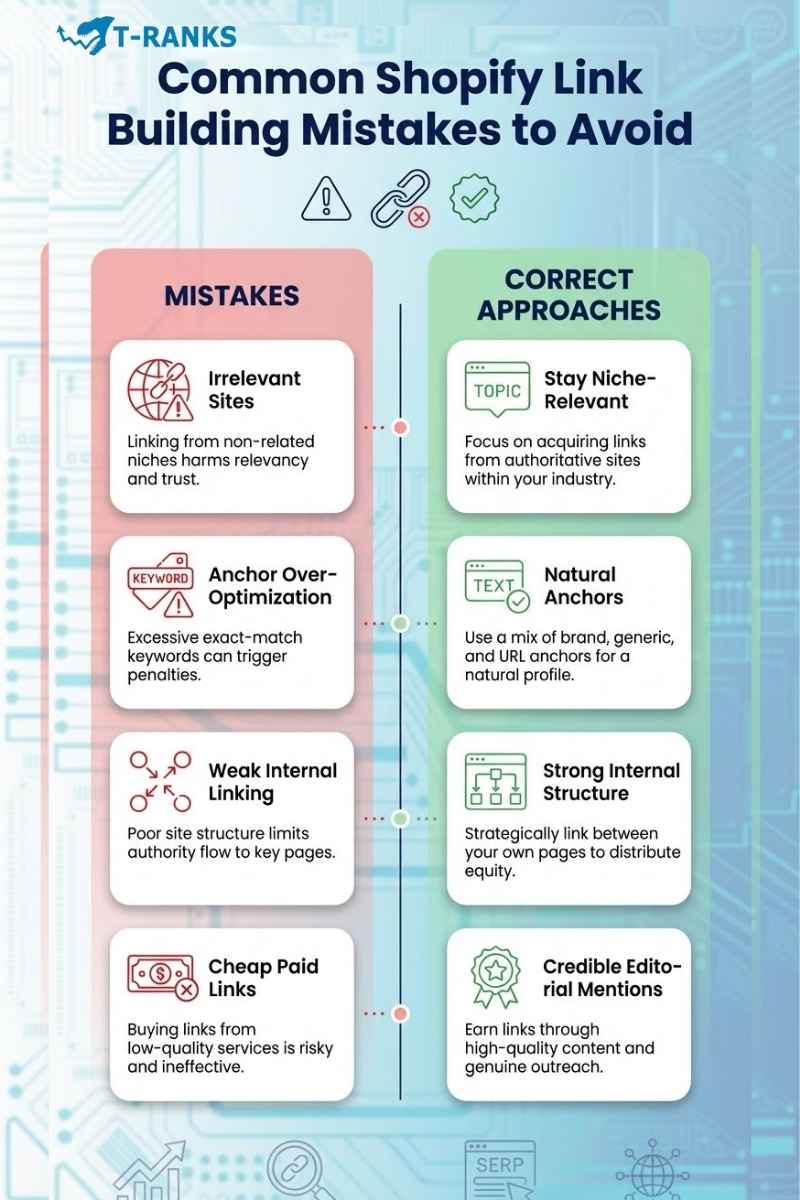
Link building helps Shopify stores grow, but small mistakes can weaken your authority or create signals that slow your rankings. These are the issues we most often see with Shopify brands and the simple ways to avoid them.
1. Getting Links From Irrelevant or Random Websites
Backlinks from websites that have nothing to do with your niche do not help your rankings. They dilute topical relevance and make your profile look unnatural.
Better approach:
• Prioritise niche blogs, industry sites, and relevant directories
• Avoid generic “SEO directory” submissions
• Keep your link profile focused on the topics you actually sell
For Shopify stores, relevance matters more than volume.
2. Overusing Automation and Creating Footprints
Automation is useful for research, but it becomes risky when it sends repetitive emails or generates the same anchor text across multiple backlinks.
Keep it safe by:
• Sending manual outreach with short, personal messages
• Using tools only for tracking, not writing
• Avoiding template-based emails that appear identical across campaigns
Shopify’s fixed URL structure makes footprints easier for Google to detect, so variation is important.
3. Weak Internal Linking Between Blogs, Collections, and Products
External links only work when your internal structure supports them. If your blog posts and collections do not link properly, link equity gets stuck instead of flowing through your store.
Improve internal flow by:
• Linking blog articles to related collections or products
• Ensuring collections connect clearly to their main items
• Keeping important pages accessible within a few clicks
A single strong backlink performs far better when your store is internally connected.
4. Using the Same Anchor Text Too Often
Repeating the same keyword in every backlink creates an obvious pattern. This makes your profile look forced and can slow rankings.
A natural anchor profile includes:
• Branded anchors (your store name)
• Light partial-match keywords
• Plain URLs or generic anchors
The goal is variation, not precision.
5. Buying Cheap Links From Low-Quality Networks
Links from marketplaces, expired domains, or spam networks may look attractive, but they carry the highest risk. These links often come from irrelevant or low-trust websites.
Safer alternative:
• Earn links through PR mentions, reviews, partnerships, and resource pages
• Focus on quality over quantity
• Avoid any link that is sold as “fast,” “guaranteed,” or “high DA for cheap”
Strong Shopify rankings depend on credibility, not shortcuts.
6. Skipping Regular Backlink Audits
Your backlink profile changes constantly. Ignoring it allows toxic, irrelevant, or hacked-site links to accumulate over time.
Good habits include:
• Reviewing new links every few months
• Flagging suspicious domains early
• Disavowing harmful links only when removal is not possible
Regular audits protect the authority you’ve already built.
Avoiding these common mistakes ensures your Shopify link building efforts stay safe, relevant, and consistently effective. When your backlinks come from the right sources and your internal structure supports them, your store grows naturally without unnecessary risk.
How to Monitor and Maintain Your Shopify Backlink Profile
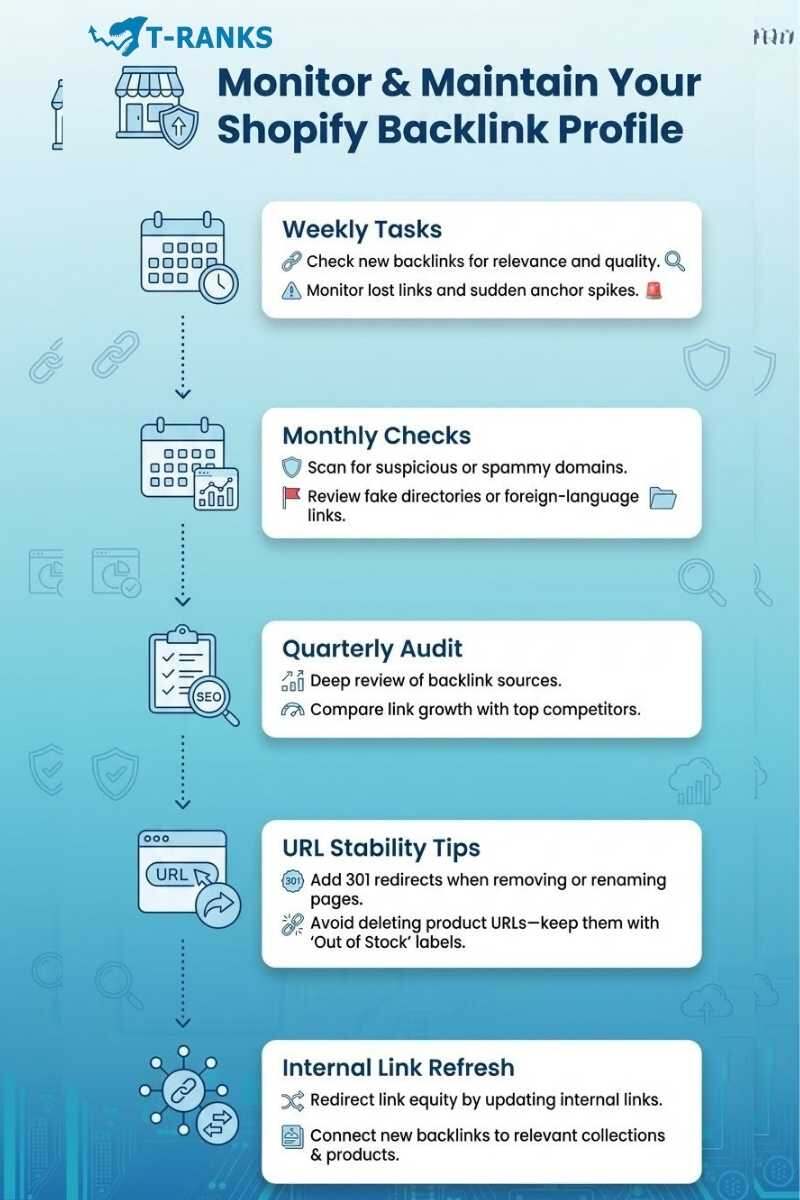
Keeping your backlink profile healthy is one of the simplest ways to protect your Shopify rankings and avoid sudden traffic drops. A clean profile helps Google trust your store, keeps spam away, and ensures every link you earn continues to support your collections and products. The goal is not to check everything daily, but to follow a simple routine that catches problems early.
1. Set Up Basic Tracking With GSC and One SEO Tool
You only need two things to monitor your backlink profile properly:
Google Search Console and one reliable SEO tool such as Ahrefs or SEMrush.
GSC shows you:
• Which sites link to you
• Which pages receive the most links
• Alerts if something unusual happens
Your SEO tool helps you:
• Track new and lost backlinks
• Check anchor text patterns
• Spot suspicious or spammy domains
This setup gives you everything you need without overwhelming you with data.
2. Follow a Simple Monitoring Routine
Most Shopify merchants don’t need complex processes. A simple schedule works best:
Weekly Checks:
• Look at new backlinks and see if they are relevant
• Check if any important links were lost
• Review any sudden anchor text spikes
Monthly Checks:
• Scan for suspicious or foreign-language links
• Look for fake directory links added without permission
• Ensure your top collection pages still hold their best links
Quarterly Checks:
• Do a deeper audit of all backlink sources
• Compare your link growth to your top 2–3 competitors
• Strengthen internal linking where new backlinks landed
This routine protects your authority without consuming your time.
3. Handle Toxic or Suspicious Backlinks Early
Not every bad link needs a disavow. Most do not.
But some backlinks can quietly harm your rankings over time.
Watch out for links coming from:
• Spammy blogs or hacked websites
• Adult, gambling, or casino domains
• Auto-generated pages with thousands of outgoing links
If you find a clearly harmful backlink:
• Try contacting the site owner and request removal
• If that fails, add it to your disavow list
• Upload the list in Google Search Console
Use disavow only for harmful links you cannot remove manually. It is a safety net, not a routine task.
4. Keep Your Shopify URLs Stable to Avoid Losing Good Backlinks
Many Shopify stores lose backlinks unintentionally because of:
• Changing collection names
• Deleting old product URLs
• Removing seasonal pages
• Switching themes or apps that modify URLs
When you remove or rename a URL without redirecting it, all backlinks pointing to that page lose their value.
Good habits include:
• Always adding a 301 redirect when removing or renaming a page
• Leaving discontinued product pages live with “Out of Stock” + alternatives
• Keeping collection URLs consistent through seasons
This protects your existing backlinks and saves your authority from leaking.
5. Use Internal Linking to Preserve and Distribute Link Equity
Monitoring backlinks is not only about checking what you get.
It’s also about making sure your store actually uses the link equity.
When a backlink points to:
• A blog post → link from that post to a relevant collection or product
• A collection → link to your highest-value products
• Your homepage → highlight important collections in your navigation
These small adjustments ensure every backlink strengthens multiple pages, not just one.
6. Track Outcomes, Not Just Links
A backlink only matters if it helps your store grow.
Instead of focusing on the total number of links, monitor the effects:
• Are your collection pages gaining rankings?
• Did referral traffic increase from certain backlinks?
• Are specific pages receiving more impressions in GSC?
• Are your main products being crawled and indexed faster?
This tells you which link sources actually matter—and which ones didn’t move the needle.
7. Treat It Like a Regular Health Check, Not a Complicated Audit
You don’t need to monitor every metric or chase every detail.
A simple routine—checking weekly, reviewing monthly, and auditing quarterly—is enough to keep your Shopify backlink profile clean, safe, and growing.
When your links are relevant, your URLs are stable, and your internal linking is strong, your Shopify store stays healthy even during major Google updates.
Safer Alternatives and Complementary Tactics
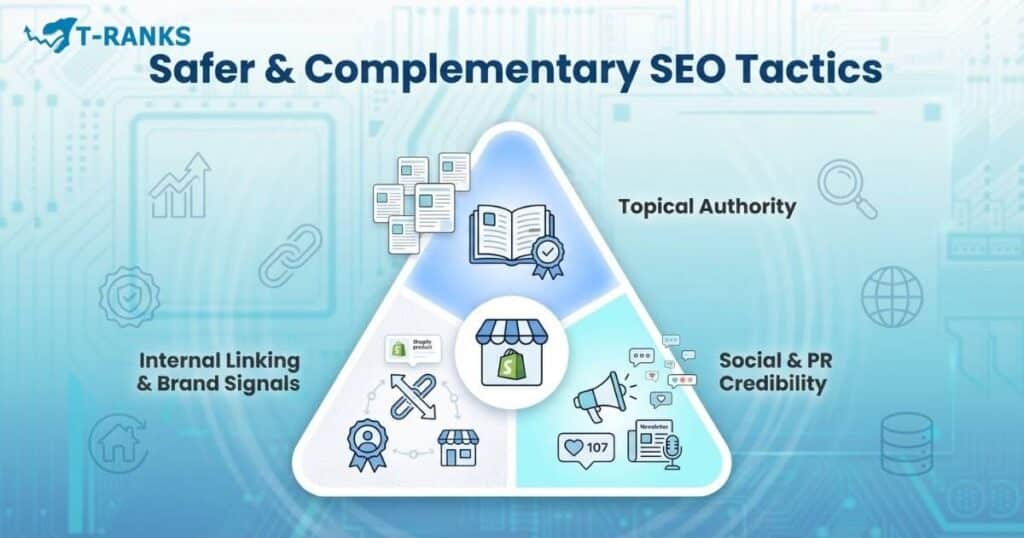
These methods help your Shopify store grow even when you’re not actively building backlinks. They improve how Google understands your brand and keep your authority increasing safely over time.
Build Topical Authority With Simple Blog Content
Topical authority means showing Google you understand your niche.
You don’t need huge guides, just helpful articles that answer real customer questions.
Easy ways to build it:
• Write short blogs that solve buyers’ common problems
• Create one main guide and link smaller posts around it
• Link every blog to the right collection or product page
This helps you rank for more keywords, even before earning links.
Use Internal Links and Clear Brand Signals
Internal links guide Google through your store and help it understand which pages matter most.
Quick habits that work:
• Link blogs to matching collections or products
• Use natural anchors like “winter jackets” or “pet beds”
• Fix pages that have no internal links
Clear brand signals also help Google trust your store.
Keep product names consistent, add schema on key pages, and maintain a complete About page.
Use Social and PR Signals for Extra Trust
Social engagement and light PR mentions don’t increase PageRank, but they show Google your brand is active and real.
Helpful signals include:
• Good engagement on Instagram, TikTok, or Pinterest
• Customer reviews on Google or Facebook
• Mentions in blogs, podcasts, or newsletters
These signals often lead to natural backlinks , the safest links you can earn.
Conclusion: Building Shopify Authority the Smart Way
In conclusion, growing a Shopify store with safe, effective link building comes down to earning relevant backlinks, strengthening your internal architecture, and building genuine topical authority. High-quality links improve rankings, trusted mentions increase credibility, and a clean backlink profile protects your long-term visibility. When you combine strategic outreach, strong content, and steady maintenance, your store becomes easier for customers to find and search engines to trust.
To take your Shopify authority to the next level with expert-built strategies and risk-free link growth, partner with T-Ranks and accelerate your eCommerce success today.
Frequently Asked Questions About Shopify Link Building
How long does it take to see results from Shopify link building?
Most stores see noticeable improvements within 3–6 months. The speed depends on link quality, niche difficulty, and how consistently you build authority.
Is link building still effective for Shopify in 2026?
Yes. Relevant, high-quality backlinks remain one of the strongest ranking signals and directly improve authority, visibility, and trust.
Can I use automated tools for Shopify backlinks?
Use automation only for research, tracking, and prospecting. Manual outreach protects authenticity, avoids spam patterns, and keeps your link profile safe.
What are the safest link building methods for Shopify?
Guest posts, digital PR, resource pages, unlinked mention recovery, and genuine brand features are the safest. Avoid PBNs, paid link networks, and low-quality directories.
How many backlinks does a Shopify store need?
There’s no universal number. Aim for steady, high-quality growth and benchmark your referring domains against top competitors in your niche.
Should I disavow bad backlinks for my Shopify store?
Yes, if they are clearly toxic. Audit your backlink profile regularly and disavow harmful or spammy links to protect long-term rankings.