Choosing the wrong type of backlink can waste both time and money. If you’re investing in PBN backlinks, it’s important to understand the difference between blog post backlinks and homepage PBN links before deciding which one is right for your website.
When comparing PBN Blog Post vs Homepage Links, each option serves a different purpose. Blog post backlinks are placed naturally within relevant articles, helping search engines understand the topic of the linked page. Homepage PBN links are placed on a website’s homepage and are often used to strengthen overall website authority and brand visibility.
Neither backlink type is better in every situation. The right choice depends on your website’s goals, competition, existing backlink profile, and overall SEO strategy. Many successful websites use both link types together because each offers unique advantages that support long term organic growth.
In this guide, you’ll learn how PBN Blog Post Backlinks and Homepage PBN Links work, the key differences between them, their benefits and limitations, and when each type is the better choice. By the end, you’ll have a clear understanding of which backlink strategy best fits your SEO goals.
What Are PBN Blog Post Backlinks?
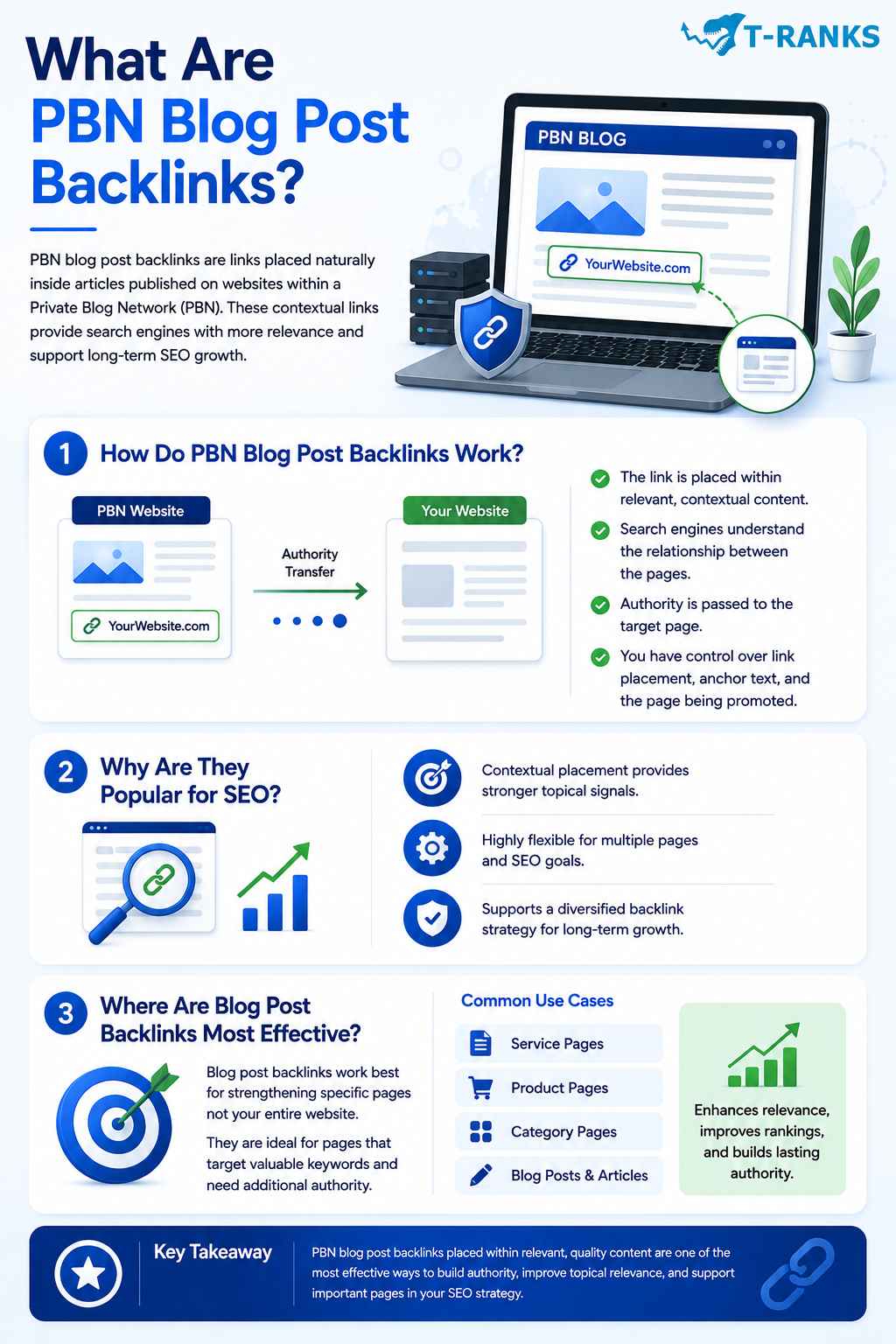
PBN blog post backlinks are links placed naturally inside articles published on websites within a Private Blog Network (PBN). Unlike homepage links, these backlinks are surrounded by relevant content, giving search engines more context about the linked page and the topic being discussed.
Many SEO professionals prefer blog post backlinks because they can be integrated naturally into informative content. When published on relevant websites with quality articles, these backlinks help create a more balanced backlink profile while supporting specific pages that need additional authority.
How Do PBN Blog Post Backlinks Work?
A PBN blog post backlink passes authority from the linking website to the target page through contextual content. Since the backlink appears within an article, search engines can better understand the relationship between the linking page and the destination page.
Website owners also have more flexibility over link placement, anchor text, and the page being promoted. This makes blog post backlinks a practical choice for supporting service pages, category pages, blog articles, and other important landing pages.
Why Are They Popular for SEO?
One of the biggest reasons SEO professionals use blog post backlinks is their contextual placement. A backlink surrounded by relevant content often provides stronger topical signals than a link placed without supporting information.
Blog post backlinks are also highly flexible. They can be used to improve topical relevance, strengthen important pages, and support a diversified link building strategy that focuses on long term organic growth instead of short term results.
Where Are Blog Post Backlinks Most Effective?
Blog post backlinks work best when you want to strengthen individual pages rather than your entire website. They are commonly used for service pages, product pages, category pages, and informative blog posts that target specific keywords.
Because these backlinks are placed within relevant content, they also help reinforce the topic of the destination page. This makes them a valuable option for websites looking to improve both authority and topical relevance as part of a complete SEO strategy.
What Are Homepage PBN Links?

Homepage PBN links are backlinks placed directly on the homepage of a website within a Private Blog Network (PBN). Unlike blog post backlinks, which appear inside articles, homepage links are displayed on the site’s main page. Their primary purpose is to pass authority from the homepage to the linked website and strengthen its overall backlink profile.
Many SEO professionals use homepage PBN links to support brand authority and improve the strength of important pages. Since the homepage is often one of the most authoritative pages on a website, backlinks placed there can become a valuable part of a well planned link building strategy.
How Do Homepage PBN Links Work?
A homepage PBN link passes authority directly from the homepage of the linking website to the destination page. Because homepages usually receive the most internal links and external attention, they often carry significant authority within a website.
These backlinks are commonly used to strengthen a website’s homepage, important landing pages, or branded pages. Their value depends on the quality of the linking domain, its topical relevance, and how naturally the backlink fits within the overall backlink profile.
Why Do SEO Professionals Use Homepage PBN Links?
One reason homepage PBN links are popular is their ability to provide continuous visibility on the linking website. As long as the backlink remains on the homepage, it can continue passing authority without being limited to a single article.
Homepage links are also useful for building brand recognition and supporting websites that need stronger overall authority. When used alongside contextual backlinks, they can contribute to a more balanced and diversified SEO strategy.
Where Are Homepage PBN Links Most Effective?
Homepage PBN links are often most effective when supporting a website’s homepage or other high priority pages that benefit from broader authority signals. They can also complement branding campaigns by increasing the visibility of a website across relevant domains.
Rather than replacing contextual backlinks, homepage links work best as part of a diversified backlink profile. Combining both link types allows website owners to strengthen overall authority while also improving the topical relevance of important pages.
PBN Blog Post vs Homepage Links: Key Differences
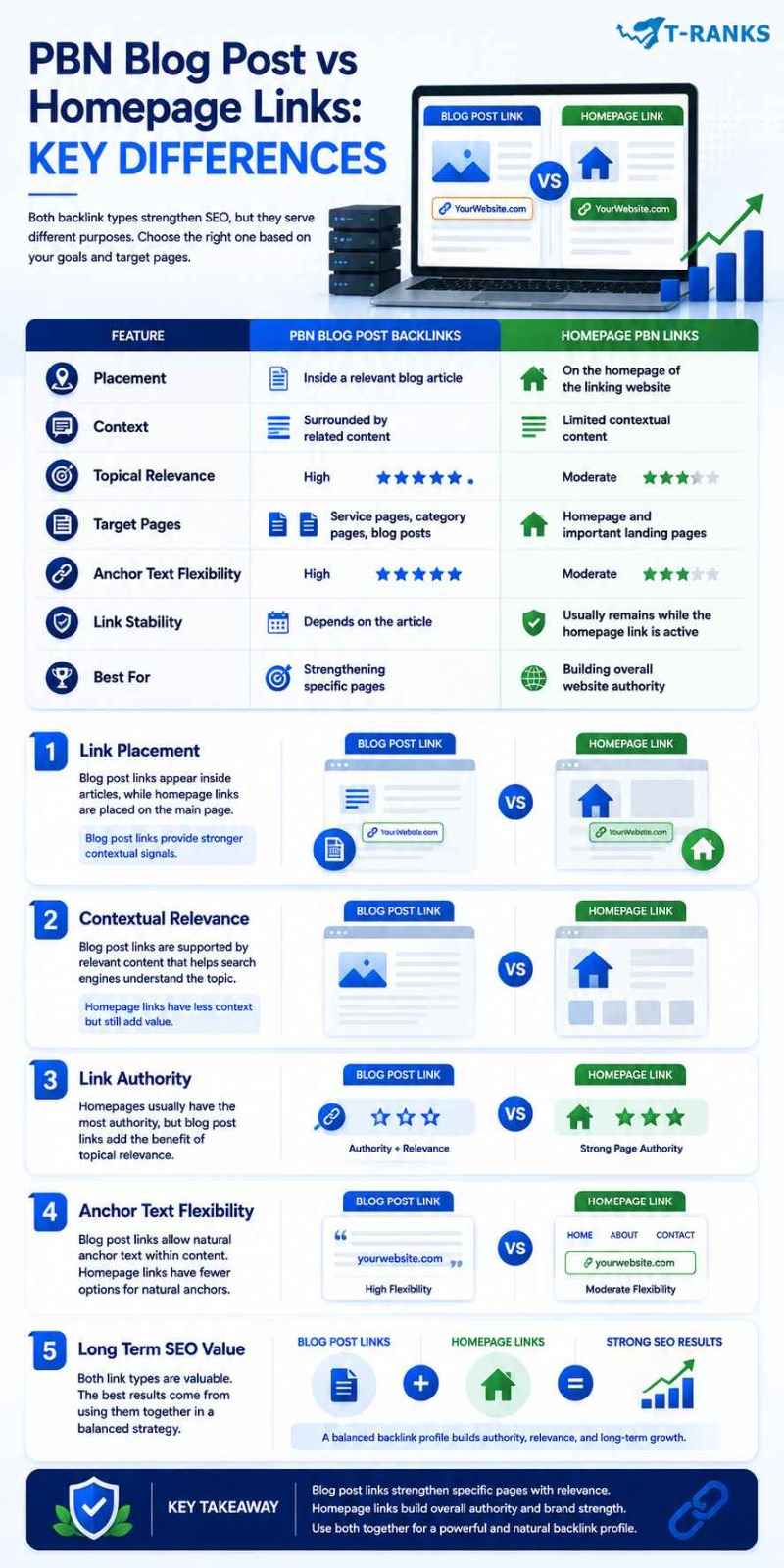
Now that you understand how both backlink types work, it’s easier to compare them side by side. While both are designed to strengthen a website’s SEO, they achieve different goals and provide value in different ways. Choosing the right option depends on your link building strategy, target pages, and overall SEO objectives.
Instead of asking which backlink is better, it’s more helpful to ask which one is better for your specific goals. The comparison below highlights the key differences between PBN Blog Post Backlinks and Homepage PBN Links.
| Feature | PBN Blog Post Backlinks | Homepage PBN Links |
| Placement | Inside a relevant blog article | On the homepage of the linking website |
| Context | Surrounded by related content | Limited contextual content |
| Topical Relevance | High | Moderate |
| Target Pages | Service pages, category pages, blog posts | Homepage and important landing pages |
| Anchor Text Flexibility | High | Moderate |
| Link Stability | Depends on the article | Usually remains while the homepage link is active |
| Best For | Strengthening specific pages | Building overall website authority |
Link Placement
The biggest difference is where the backlink appears. Blog post backlinks are placed naturally within an article, while homepage links appear on the main page of the website. This difference affects how the backlink is presented to both users and search engines.
Because blog post backlinks are surrounded by relevant content, they often provide stronger contextual signals. Homepage links focus more on passing authority from one of the website’s most important pages.
Contextual Relevance
Context plays an important role in modern SEO. Blog post backlinks are supported by surrounding content that helps search engines understand the topic of the linked page.
Homepage links usually have less supporting content because they are placed on the site’s main page. Even so, they can still contribute to a broader backlink strategy when used alongside contextual links.
Link Authority
Homepage links often benefit from being placed on one of the strongest pages of a website. Since homepages commonly receive the most internal links and external attention, they may pass significant authority to the linked website.
Blog post backlinks also pass authority, but they add the benefit of topical relevance through the surrounding content. The overall value depends on the quality of the linking website rather than the placement alone.
Anchor Text Flexibility
Blog post backlinks offer greater flexibility because anchor text can be integrated naturally within a sentence or paragraph. This allows the backlink to fit smoothly into the content without disrupting the reading experience.
Homepage links generally provide fewer opportunities for natural anchor placement. They often use shorter anchors, branded text, or navigation style links depending on the website’s layout.
Long Term SEO Value
Neither backlink type is universally better than the other. Blog post backlinks are often preferred when supporting individual pages with relevant content, while homepage links are useful for strengthening overall website authority.
For many websites, the strongest results come from using both link types together. A balanced backlink profile that combines contextual relevance with broader authority signals is usually more effective than relying on only one type of backlink.
Why PBN Blog Post Backlinks Work Best

PBN blog post backlinks are often the preferred choice when the goal is to improve the visibility of specific pages through relevant, contextual content. Because these backlinks are placed inside articles, they naturally connect the linked page to the surrounding topic, helping search engines better understand its relevance.
This does not mean blog post backlinks are always the best option. Their effectiveness depends on the quality of the linking website, the relevance of the content, and how they fit into your overall SEO strategy. When used correctly, they can provide several important advantages.
Stronger Contextual Relevance
One of the biggest strengths of blog post backlinks is their ability to provide context. The surrounding article helps explain why the backlink is relevant, making it easier for search engines to understand the relationship between the linking page and the destination page.
This contextual connection can support topical relevance and make the backlink feel more natural. It also creates a better experience for readers because the link appears within useful, related content.
Better Support for Internal Pages
Many websites want to improve the rankings of specific pages rather than only their homepage. Blog post backlinks make it easy to direct authority to service pages, product pages, category pages, and informative blog posts.
Supporting important internal pages helps distribute authority across the website and gives SEO professionals more flexibility when planning a link building campaign.
More Natural Anchor Text
Anchor text is easier to use naturally within a blog article than on a homepage. Since the backlink becomes part of a complete sentence, it can blend smoothly into the content without looking forced.
This flexibility allows website owners to use branded, generic, partial match, or descriptive anchor text while maintaining a more natural backlink profile.
Greater Content Flexibility
Blog articles provide enough space to discuss a topic in detail before introducing a backlink. This allows the link to appear in a relevant context rather than standing alone on a page.
Content can also be written around specific keywords, products, services, or industries, making blog post backlinks suitable for websites that want to strengthen topical authority over time.
Ideal for Long Term SEO Growth
Blog post backlinks work well as part of a long term SEO strategy because they combine authority with relevance. They support individual pages while helping build a diversified backlink profile that grows naturally over time.
When combined with quality content, technical SEO, and other link building methods, blog post backlinks can become an important part of a sustainable strategy for improving organic search visibility.
When Homepage PBN Links Work Best

Homepage PBN links can be a valuable addition to an SEO strategy when the goal is to strengthen overall website authority instead of focusing on a single page. Because these backlinks come from the homepage of the linking website, they are often used to support branding, improve trust signals, and reinforce the authority of important pages.
Like any backlink, their value depends on the quality of the website, topical relevance, and how naturally they fit into your backlink profile. When used alongside contextual backlinks, homepage links can help create a more balanced and sustainable link building strategy.
Strengthening Overall Website Authority
The homepage is usually one of the strongest pages on a website because it often receives the most internal links and external backlinks. A homepage PBN link can help pass some of that authority to the linked website as part of a broader SEO campaign.
For websites looking to build a stronger overall presence, homepage links can complement other backlink types by supporting the authority of the domain rather than focusing on a single page.
Supporting Brand Visibility
Homepage links keep your website visible on one of the most important pages of the linking domain. This can help reinforce your brand across relevant websites while creating a more consistent online presence.
Although brand visibility alone does not guarantee better rankings, it contributes to a well rounded backlink profile and supports long term SEO efforts.
Suitable for Homepage and High Priority Pages
Homepage PBN links are commonly used to support a website’s homepage, brand pages, or other high priority landing pages that benefit from broader authority signals. They are often chosen when the objective is to strengthen the overall domain rather than a specific article or service page.
Selecting the right destination page depends on your SEO goals and the structure of your website. A thoughtful approach usually produces better results than sending every backlink to the same location.
Complementing Contextual Backlinks
Homepage links should not replace blog post backlinks. Instead, they work best alongside contextual links that strengthen individual pages through relevant content.
Combining both backlink types creates a more diversified backlink profile. One supports overall authority, while the other reinforces topical relevance, allowing each placement to contribute in a different way.
Best for a Balanced Link Building Strategy
A successful SEO campaign rarely depends on one type of backlink. Homepage links, blog post backlinks, guest posts, niche edits, and other editorial links each serve a different purpose within a healthy backlink profile.
Using homepage PBN links as one part of a broader link building strategy helps create a stronger foundation for sustainable organic growth while reducing reliance on any single backlink source.
Risks and Limitations of Each Link Type
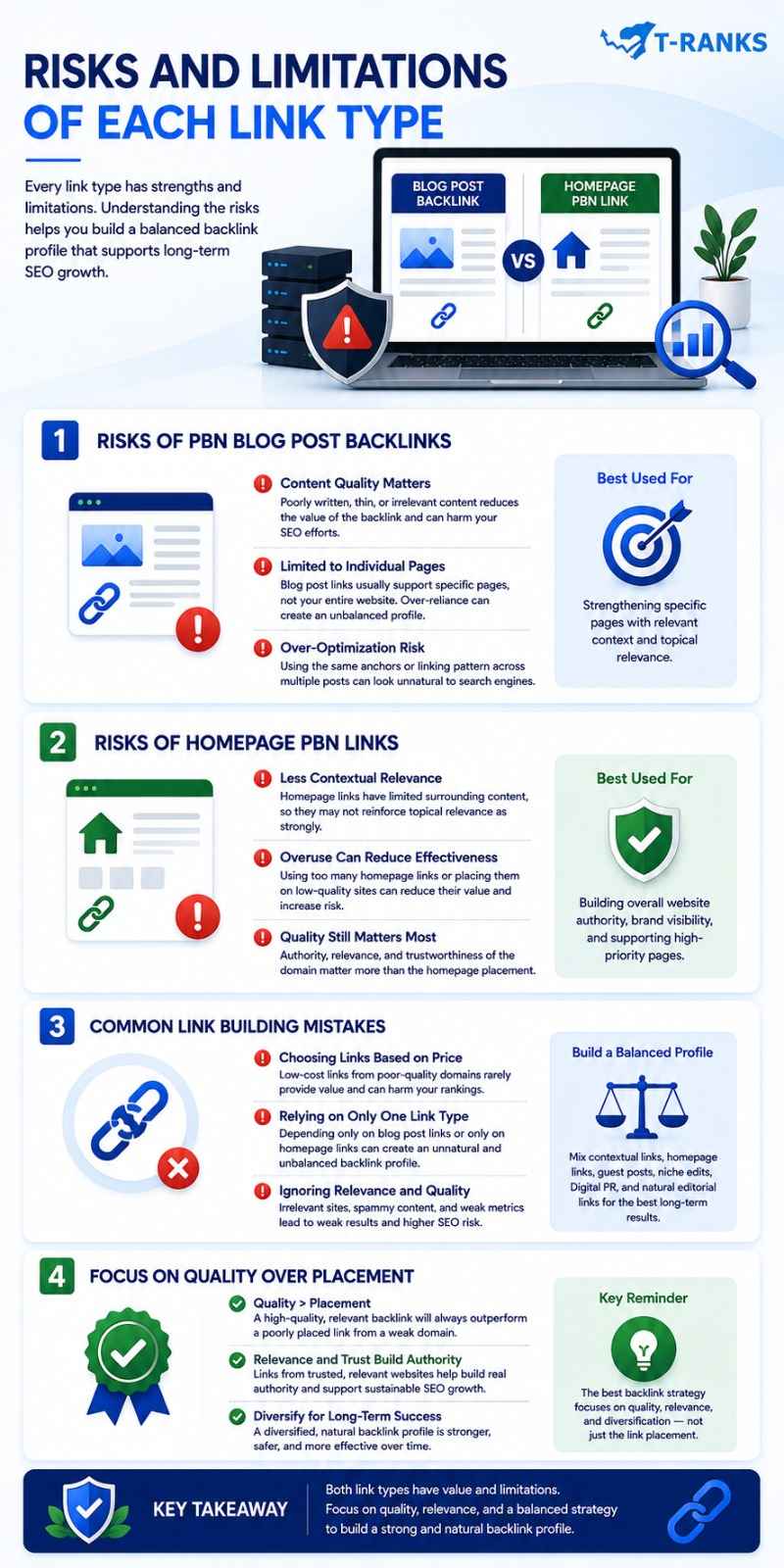
Every link building strategy has strengths and limitations. The same is true for PBN Blog Post Backlinks and Homepage PBN Links. Understanding these limitations helps you make informed decisions and build a backlink profile that supports long term SEO growth instead of relying on a single type of backlink.
The goal is not to avoid one link type in favor of another. Instead, it’s to understand when each option is appropriate and how both can fit into a balanced SEO strategy. Choosing quality websites, maintaining natural link patterns, and diversifying your backlink profile are often more important than the placement of the backlink itself.
Risks of PBN Blog Post Backlinks
Blog post backlinks depend heavily on the quality of the article and the relevance of the linking website. If the content is poorly written, unrelated to your niche, or created only to insert backlinks, the overall value of the link may be reduced.
Another limitation is that blog posts usually support individual pages rather than the entire website. Without a broader backlink strategy, relying only on contextual backlinks may not provide the balanced authority profile that many websites need.
Risks of Homepage PBN Links
Homepage PBN links often provide less contextual information because they are not surrounded by detailed, topic specific content. As a result, they may not reinforce topical relevance as effectively as contextual blog post backlinks.
Homepage links can also become less effective if they are overused or placed on low quality websites with obvious linking patterns. Their value depends on the authority, relevance, and trustworthiness of the linking domain rather than the homepage placement alone.
Common Link Building Mistakes
One of the most common mistakes is choosing backlinks based only on price instead of quality. Low quality domains, poor content, and irrelevant websites rarely contribute to sustainable SEO growth, regardless of where the backlink is placed.
Another mistake is relying on only one type of backlink. A healthy backlink profile usually includes a mix of contextual backlinks, homepage links, guest posts, niche edits, Digital PR, and naturally earned editorial links. This balanced approach helps build authority while reducing dependence on any single link building method.
Focus on Quality Over Placement
Many website owners spend too much time asking whether blog post backlinks or homepage links are better. In reality, the quality of the linking website, the relevance of the content, and the overall backlink strategy usually have a much greater impact than the location of the backlink.
A high quality backlink from a trusted and relevant website is generally more valuable than a poorly placed backlink from a low quality domain. Focusing on quality, relevance, and diversity creates a stronger foundation for long term SEO success.
Which Link Type Should You Choose?
Choosing between PBN Blog Post Backlinks and Homepage PBN Links depends on what you want to achieve with your SEO campaign. Both backlink types provide value, but they support different objectives. Understanding your website’s current position, competition, and long term goals will help you make the right decision.
Instead of looking for a single winner, focus on selecting the backlink type that best matches your SEO strategy. In many cases, combining both options creates a stronger and more natural backlink profile than relying on only one.
Best for New Websites
New websites often need to build topical relevance before competing for highly competitive keywords. Blog post backlinks can help by placing links within relevant content that supports important service pages, category pages, and blog articles.
As the website grows, homepage PBN links can be added gradually to strengthen overall domain authority and create a more balanced backlink profile.
Best for Established Websites
Established websites usually have a stronger foundation and can benefit from using both backlink types together. Blog post backlinks continue to strengthen individual pages, while homepage links help reinforce overall website authority.
The right balance depends on your existing backlink profile and the goals of your SEO campaign rather than following a fixed formula.
Best for Competitive Niches
Highly competitive industries often require a diversified backlink strategy. Depending on only one type of backlink can limit long term growth and make your backlink profile appear less natural.
Combining contextual blog post backlinks with homepage links, guest posts, niche edits, Digital PR, and other editorial backlinks creates a stronger and more resilient SEO strategy.
When to Combine Both Link Types
For many websites, using both backlink types is the most practical approach. Blog post backlinks help improve topical relevance and strengthen individual pages, while homepage PBN links contribute to broader authority and brand visibility.
Using both placements as part of a carefully planned link building strategy allows each backlink to serve a different purpose. This balanced approach supports sustainable organic growth while reducing reliance on any single backlink source.
The Final Decision
There is no universal answer to the question of which backlink type is better. The best choice depends on your website’s goals, competition, existing authority, and overall SEO strategy.
If your objective is to strengthen specific pages with relevant content, blog post backlinks may be the better option. If you’re looking to reinforce overall website authority, homepage PBN links can provide additional value. For many businesses, the strongest results come from combining both approaches within a diversified backlink strategy.
How to Choose the Right PBN Provider
Choosing the right PBN provider is just as important as choosing the right backlink type. Even the best link building strategy can deliver poor results if the backlinks come from low quality websites or irrelevant domains. A reliable provider focuses on quality, relevance, and long term SEO value instead of simply selling backlinks.
Before purchasing any PBN service, take time to understand how the provider builds and manages its network. Looking beyond pricing and backlink numbers can help you invest in links that support sustainable organic growth and strengthen your overall SEO strategy.
Check Domain Quality
The quality of the linking website should always come first. Look for providers that use aged domains with clean histories, relevant backlink profiles, and useful content instead of websites that exist only to sell links.
A strong domain foundation improves the value of every backlink and helps create a healthier backlink profile over time.
Prioritize Topical Relevance
Relevance plays a major role in modern SEO. Backlinks from websites related to your industry usually provide stronger contextual signals than links from unrelated niches.
Ask whether the provider matches backlinks to your niche rather than placing every client on the same group of websites. A more targeted approach often delivers better long term results.
Evaluate Content Quality
High quality backlinks should appear within original, informative content that provides value to readers. Thin or poorly written articles can reduce the credibility of both the linking website and the backlink itself.
A provider that invests in quality content demonstrates a stronger commitment to building natural backlinks instead of simply placing links wherever possible.
Look for a Diversified Approach
A trustworthy provider understands that no single backlink type fits every SEO campaign. Depending on your goals, they should be able to recommend blog post backlinks, homepage PBN links, or a combination of both rather than pushing one solution for every client.
Providers that focus on building balanced backlink profiles usually create stronger long term SEO strategies than those offering a one size fits all service.
Choose Transparency Over Big Promises
Be cautious of providers that guarantee top rankings or instant SEO success. Search engine performance depends on many factors, including content quality, technical SEO, competition, and the overall strength of your backlink profile.
A reputable provider explains its process clearly, sets realistic expectations, and focuses on building high quality backlinks that support sustainable organic growth over time.
Why Choose T-RANKS for PBN Backlinks?
Choosing a PBN provider is about more than buying backlinks. You need a partner that understands how different link placements support different SEO goals and builds strategies based on quality instead of quantity. At T-RANKS, we focus on creating backlink campaigns that help businesses build sustainable organic growth through relevant, high quality PBN links.
Whether you need PBN Blog Post Backlinks, Homepage PBN Links, or a combination of both, our approach is built around your website’s goals, competition, and existing backlink profile. Every campaign is planned to strengthen your SEO strategy while maintaining a natural and diversified backlink profile.
High Quality PBN Network
We carefully select domains that have clean histories, relevant backlink profiles, and quality content. Every website in our network is chosen with a focus on long term SEO value rather than simply increasing the number of available domains.
By prioritizing quality over quantity, we help clients build stronger backlink profiles that support sustainable search performance.
Relevant Link Placements
Every website has different SEO needs. Some campaigns benefit more from contextual blog post backlinks, while others require homepage PBN links to strengthen overall website authority.
Instead of using the same approach for every client, we recommend link placements based on your objectives, target pages, and long term SEO strategy.
Quality Content Standards
Every backlink is placed within original, well written content that fits naturally with the topic of the linking website. This helps create a better experience for readers while supporting a more natural backlink profile.
We believe strong content and thoughtful link placement work together to create backlinks that provide lasting SEO value.
Transparent SEO Approach
We believe clients should understand how their campaigns are planned and managed. Rather than making unrealistic ranking promises, we focus on clear communication, quality standards, and realistic expectations.
This transparent approach allows businesses to make informed decisions and invest in link building strategies that align with their long term goals.
Focused on Long Term Success
Successful SEO is built through consistent effort, quality content, technical optimization, and a diversified backlink profile. PBN backlinks are one part of that process, not the entire strategy.
At T-RANKS, our goal is to help businesses build stronger authority by delivering relevant backlinks that support sustainable organic growth and long term search visibility.
Final Thoughts
In conclusion, choosing between PBN Blog Post Backlinks and Homepage PBN Links depends on your SEO objectives, website authority, and overall link building strategy. Blog post backlinks are well suited for improving topical relevance and strengthening individual pages, while homepage PBN links can help reinforce overall website authority and brand visibility. Both backlink types have unique advantages, and the strongest SEO campaigns often combine them to create a balanced and diversified backlink profile.
The success of any backlink strategy depends less on where the link is placed and more on the quality of the linking website, its relevance to your niche, and how naturally the backlink fits within your overall SEO efforts. Focusing on high quality domains, valuable content, and a well planned link building strategy provides a stronger foundation for sustainable organic growth.
If you’re looking for high quality PBN Blog Post Backlinks, Homepage PBN Links, or a customized backlink strategy, T-RANKS is here to help. Contact our team today to discuss your SEO goals and build a backlink campaign designed for long term success.
FAQs About PBN Blog Post vs Homepage Links
Which Is Better, PBN Blog Post Backlinks or Homepage PBN Links?
Neither is universally better. Blog post backlinks are ideal for building topical relevance and supporting specific pages, while homepage PBN links help strengthen overall website authority. The best choice depends on your SEO goals.
Do PBN Blog Post Backlinks Pass More SEO Value?
They can provide strong SEO value because they are placed within relevant content. Their effectiveness depends on the quality of the website, the article, and the overall backlink strategy rather than placement alone.
Are Homepage PBN Links Still Effective?
Yes, homepage PBN links can still support SEO when they come from relevant, high quality websites. They work best as part of a diversified backlink profile instead of being the only type of backlink.
Can I Use Both Blog Post Backlinks and Homepage PBN Links?
Yes. Many SEO campaigns combine both link types because each serves a different purpose. Using both can create a more balanced backlink profile and support long term organic growth.
Which Link Type Is Better for New Websites?
Blog post backlinks are often a good starting point because they provide contextual relevance and help strengthen important internal pages. Homepage links can be added later as the website’s authority grows.
Which Link Type Is Better for Competitive Niches?
A combination of both is often the strongest approach. Competitive industries usually benefit from a diversified backlink strategy rather than relying on a single type of link.
Are Homepage PBN Links Riskier Than Blog Post Backlinks?
Not necessarily. The level of risk depends more on the quality of the linking website, relevance, and natural link patterns than on whether the backlink appears on a homepage or within a blog post.
Should Homepage PBN Links Point to the Homepage?
They often point to a website’s homepage, but they can also support important landing pages when it aligns with the overall SEO strategy. The destination should match your campaign goals.
How Do I Choose the Right PBN Link?
Choose the backlink type based on your objectives, target pages, competition, and existing backlink profile. A balanced strategy usually delivers better long term results than focusing on only one placement.
What Should I Look for in a PBN Provider?
Choose a provider that prioritizes quality domains, relevant websites, original content, natural link placement, and transparent SEO practices. These factors generally have a greater impact than the backlink placement itself.